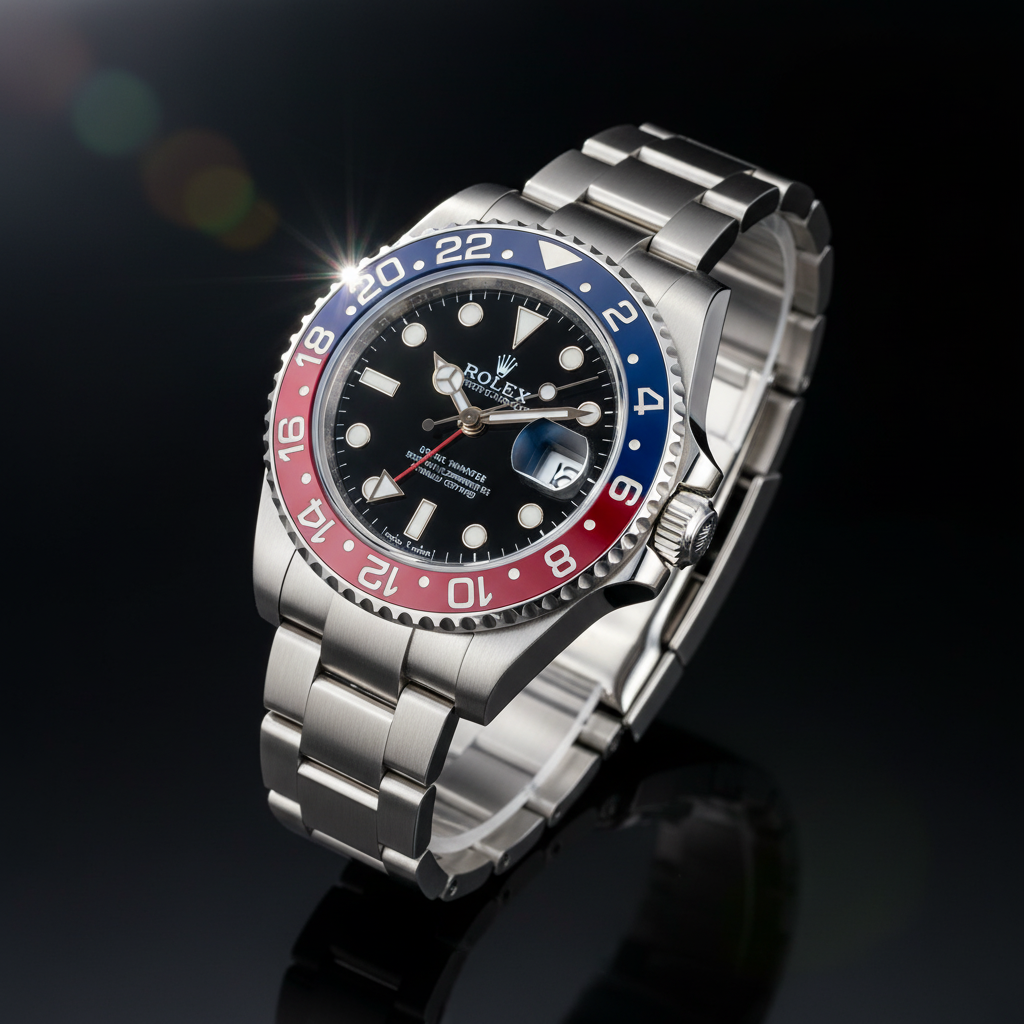

Rolex introduced the Cosmograph in 1963 as a tool for racing drivers, and by the late 1960s the name Daytona, after the Florida speedway, had appeared on the dial. For a long time it was not a particularly easy watch to sell. Its manual-wind movement and tachymeter bezel made it a niche purchase, and dealers sometimes kept examples in the case for years. Today it is one of the most recognized and most wanted chronographs in the world. That reputation leads many sellers in New York to assume that any Daytona will bring an extraordinary offer. The truth is more nuanced. The name covers several generations, movements, metals and dial variations, and those details can move an offer a long way.
This guide explains what a buyer in Manhattan actually looks at when a Daytona comes across the counter, so you can prepare properly and recognize a fair offer when you hear one.
Start With the Reference and the Generation
The first thing any experienced buyer does is identify the reference number, which is engraved between the lugs at the 12 o'clock side of the case on many models (you may need to remove the bracelet to see it) and listed on the warranty card. The reference tells us which generation of Daytona you have, and the generation shapes everything that follows. Collectors treat the generations almost like separate watches.
Manual-wind vintage Daytonas
The earliest Daytonas, made from the 1960s into the 1980s, use hand-wound movements and often have screw-down pushers on later versions. These are collector pieces first and wristwatches second. Dial type, case condition, and whether every part is correct for the period matter enormously here. Vintage examples are the area where an in-person look by someone who handles them regularly is most valuable, because small details separate an original watch from a restored or reassembled one.
The Zenith-based automatics
From 1988 to around 2000, Rolex produced the Daytona with a modified Zenith El Primero movement, the reference 16520 being the best known. These watches have their own following. Dial details, such as the style of the sub-dials and print variations from different production years, can influence interest, and some early dials are particularly sought after. Condition of the dial matters too, since certain dials of this period aged in distinctive ways that collectors either prize or avoid.
The in-house Caliber 4130 and later models
In 2000 Rolex began fitting its own Caliber 4130 movement, and the 116520 series became the modern steel Daytona for the next sixteen years. In 2016 a Cerachrom ceramic bezel arrived on the 116500LN, followed by the 126500LN in 2023, which has a newer movement and a sapphire caseback. Gold, two-tone and platinum versions exist across these eras, with leather, Oyster or Oysterflex straps depending on the model. Each combination of metal, dial and bezel can sit in a different place in the market, so we always work from the exact reference rather than the general name.
Dial, Bezel and Originality
On a Daytona, the dial is often the single most important component after the reference. Buyers check whether it is original to the watch, whether there is any discoloration, spotting or lume damage, and whether the sub-dials and printing match what that reference should have. A dial that has been refinished or replaced almost always lowers value, even if it looks clean to the eye.
The same applies to hands, pushers, crystal, bezel and crown. Rolex service centers sometimes replace parts during a service, and in some cases replaced parts are acceptable and expected. What reduces an offer is the presence of aftermarket components, mismatched parts, or modifications such as added diamonds on a standard model. A Frankenwatch, assembled from parts of different watches, is worth considerably less than a correct, original piece. This is why we open and inspect the watch in front of you rather than judging from a photo.
Condition: Case, Bracelet and Movement
Condition covers more than whether the watch looks good. A buyer looks at the case for sharp lines and crisp edges, since heavy polishing softens the lugs and bevels that give a Daytona its character. We check the bracelet for stretch, which is common after years of wear, and for the state of the clasp and links. On gold models, we look for dents, scratches and any signs of metal fatigue around the clasp.
The movement also matters. A chronograph is a complex mechanism, and a buyer will test the start, stop and reset functions, the timekeeping and the pusher feel. A Daytona that runs well and has a documented service history is easier to value with confidence. If you are wondering whether a service or polish before selling is worthwhile, the short answer is that it usually is not, because a fresh polish can remove original material and a service does not always return its cost in a higher offer. We cover that question in more detail in a separate guide.
Box, Papers and Service History
A complete set, meaning the original box, warranty card, booklets and any hang tags, supports value on a Daytona because it helps confirm the watch's age and provenance. The warranty card matters most, since it carries the serial number and the date of purchase. The more recent the watch, the more important a full set tends to be.
That said, the absence of papers does not make a Daytona unsellable. It means the watch has to be authenticated more carefully on its own merits, and the offer reflects that difference. If you have service invoices, receipts from an authorized dealer or insurance appraisals, bring them. They help show the watch's history even when the original paperwork is missing.
What About the Gold in a Gold Daytona?
Many people ask whether a gold Daytona is valued by its metal weight. A solid 18k gold case and bracelet do contain a meaningful amount of gold, and that gives the watch a floor. In almost every case, though, a Rolex in good condition is worth more as a watch than as scrap, and we would not refine a sound Daytona. Because Ideal Refiners refines in-house, we can see both sides of the equation clearly, and that is useful if you have a damaged or incomplete gold watch where the metal value really does matter. We simply have no middleman to pay, so what we offer is based on the market and the watch itself.
How to Prepare Before You Sell
- Find the reference and serial numbers. Knowing them in advance saves time and lets you compare your watch with what you expect.
- Gather everything. Box, warranty card, booklets, extra links, receipts and service papers all help.
- Do not polish or open the watch. Leave the case, crystal and bracelet as they are.
- Be ready to be candid about history. If it has had a battery of repairs, a replaced dial or a service, say so. Experienced buyers will see it anyway.
- Bring government photo ID. New York law requires it for any sale.
- Get more than one opinion. A reputable buyer is comfortable with that.
How to Spot a Low Offer
A fair offer should come with reasoning you can follow. If a buyer cannot tell you why the watch is worth what they say, or offers a figure without examining the dial, case and movement, be cautious. Be wary too of anyone who pushes you to accept immediately, or who suggests that missing papers or a minor scratch means the watch is almost worthless. A buyer who wants your Daytona will explain what they see and show their working. Remember that online prices for the same reference are often for different conditions, dials or sets, so they are a rough guide, not a quote.
Selling Your Daytona at Ideal Refiners
If you are considering selling a Rolex Daytona in New York City, you are welcome to come in for a free, no-obligation appraisal. We examine the watch in front of you at our Bowery location, which is easy to reach from Chinatown, the Financial District and the Diamond District. Most appraisals take roughly 20 minutes, and if you accept our offer we pay the same day in cash or by bank transfer. You can find us at 70 Bowery #1.1, New York, NY 10013, open Monday to Thursday 10am to 5pm and Friday 10am to 3pm. Call (347) 970-1562 if you would like to ask anything first. Remember to bring government photo ID, as New York law requires.