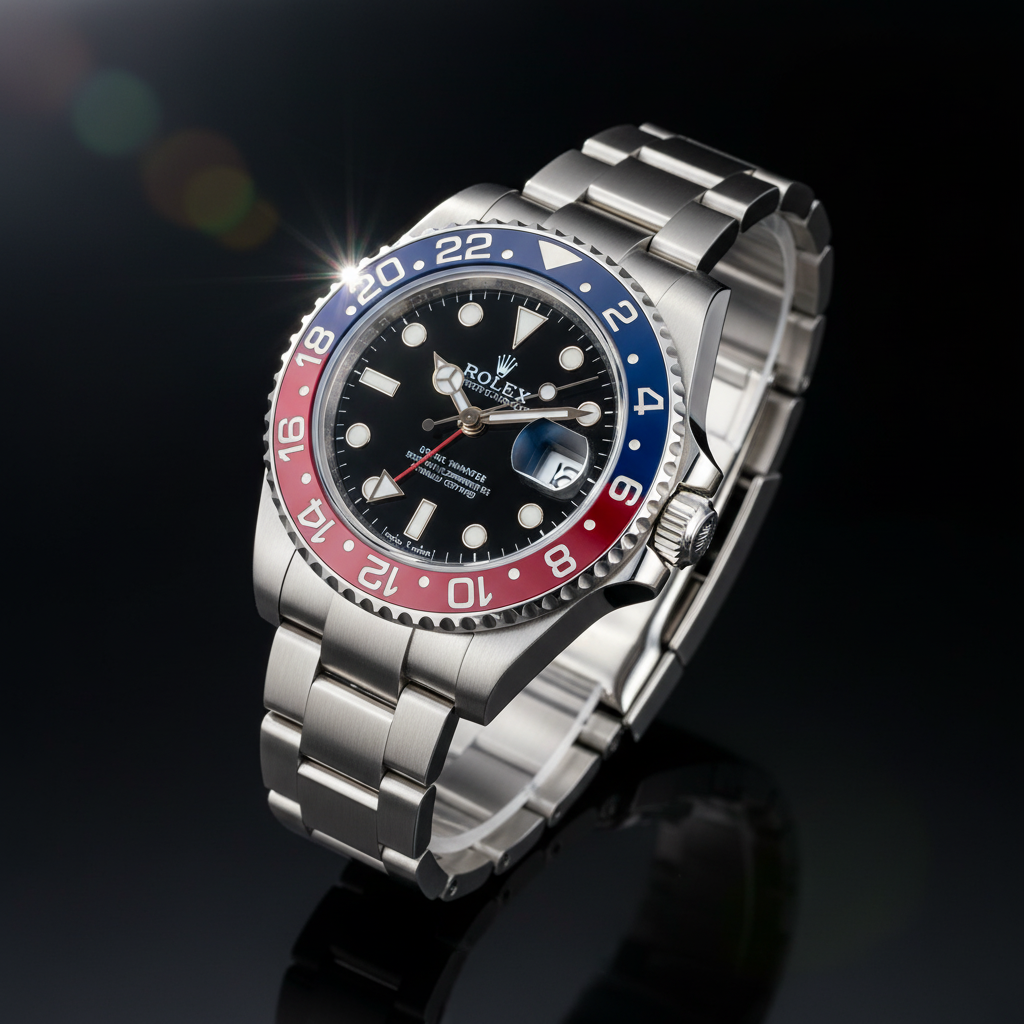
Rolex introduced the Datejust in 1945 to mark its 40th anniversary, and it was a genuine first: a self-winding chronometer wristwatch that changed the date automatically on the dial. The Cyclops lens over the date arrived in the early 1950s, the Jubilee bracelet came with the original model, and the basic recipe has barely changed since. That consistency is the reason the Datejust is everywhere. It is also the reason sellers in New York often assume every Datejust is roughly the same watch. It is not. The name covers dozens of references in sizes from 26mm to 41mm, in steel, two-tone and solid gold, with an enormous range of dials, bezels and bracelets. Those details can separate one offer from another by a wide margin.
Why the Datejust Is Harder to Value Than It Looks
A Submariner or a Daytona is a fairly narrow target. A Datejust is a family. A 36mm steel model with a smooth bezel and a white dial sits at one end, while an 18k gold model with a diamond dial and a President bracelet sits at the other, and they share little more than a name. Add several decades of production, three or four generations of movement, and a long tail of factory and aftermarket customizations, and you can see why a quick glance at a photo rarely tells the whole story.
That is also why online price comparisons mislead so many sellers. A listing for a Datejust that looks identical to yours may be a different reference, a different year, or a watch with parts that are not original. When you bring a Datejust to a buyer in Manhattan, the useful question is not "what do Datejusts sell for?" but "what exactly is this one?" Good buyers will answer that out loud as they examine the watch, and you should expect them to.
The Details That Move a Datejust Offer
Reference, size and generation
The reference number identifies the model, and it tells a buyer a great deal in one line. Rolex has offered the Datejust in 26mm, 28mm, 31mm, 34mm, 36mm and 41mm cases over the years, and the most recent generations use the 3235 movement in the 36mm and 41mm sizes, replacing the long-serving 3135. Older references, such as the 1601 and 1603 from the 1960s and 70s, carry a different kind of appeal, and the 16233 and 16234 from the 1980s and 90s have their own following. The reference is usually found between the lugs at the 12 o'clock position, under the bracelet, and the serial number can be read in the same area or, on many newer watches, on the inner rim of the dial. A buyer will check both and make sure they agree with the rest of the watch.
Metal: steel, Rolesor or solid gold
The metal is one of the largest factors. Stainless steel Datejusts are the most common and trade on watch demand alone. Two-tone models (Rolex calls steel and yellow gold "Rolesor," with Everose and white versions also made) carry a gold bezel and center bracelet links, so they sit in between. Solid gold models in 18k yellow, white or Everose gold have real precious metal content, and that gives them a floor under the price. Because we refine in-house, we can value the gold honestly, but for most solid gold Datejusts the watch value is higher than the metal value. The gold weight is a safety net, not the full story.
Dial and bezel
Dial variants are where Datejusts get interesting. Some factory dials, such as certain slate, Wimbledon green, or mother-of-pearl versions, are especially sought after. Others are simply standard. The bezel matters too: smooth, fluted and engine-turned bezels each attract different buyers, and a factory diamond bezel is a different proposition from a bezel set later by a jeweler. Watch for this in particular. Many Datejusts on the secondary market have been fitted with aftermarket diamond dials or bezels, and a stone-set Datejust that was not set by Rolex is usually valued below one that was. If you are not sure which yours is, tell the buyer what you know and let them check.
Bracelet condition
The Jubilee bracelet is a signature of the Datejust, and it is also a weak point. Over decades of wear the links loosen and the bracelet stretches, and an older bracelet can feel sloppy on the wrist. Buyers check this by holding the watch and gently testing the slack, and by looking at the clasp, the crown logo and the endlinks. An original, tight bracelet is a plus. A stretched or replaced one is not a disaster, but it is a real factor in the number.
Originality of parts
Across every Rolex we see, originality is the quiet driver of value. The dial, hands, bezel, crown, crystal and bracelet should all be correct for the reference and period. Replacement parts are not unusual on a watch that has been worn for 30 years, and a service-center part can be perfectly acceptable. A refinished dial is different. If the dial has been repainted or the lume replaced with something that does not match, collectors tend to discount the watch heavily, especially on vintage examples. Honest disclosure helps here. A buyer will find it anyway, and it is better to have a clean conversation than an awkward one.
Condition and case wear
Case wear is judged by how sharp the lugs are, whether the bevels are crisp, and whether the metal has been thinned by repeated polishing. Light surface marks are normal on any watch worn daily. Deep dings, worn-through gold plating on older gold-capped models, and over-polished lugs cost more. If you are wondering whether to polish or service the watch before you sell, we have written about it separately, and the short version is that you usually should not. A fresh polish can remove the original finish that a buyer is trying to see.
Box, papers and service history
The original box, warranty card or certificate, hang tags, extra links and any service receipts all support the story of a watch. A Datejust with full set generally sits above one without, and recent Rolex service paperwork can give a buyer more confidence in the movement. That said, complete sets are not required to sell. A Datejust without box and papers is still a Datejust, and it is valued on what it is today. Bring whatever you have, including the small items you might think are irrelevant, such as the extra bracelet links or the cardholder.
How to Avoid Being Underpaid
The most common reason a seller is underpaid is a vague appraisal. If a buyer quotes a number without examining the watch, or without naming the reference, the dial and the condition, treat that number carefully. A serious offer should be built from the specific watch in front of you and from current market rates, and the person making it should be able to explain it.
- Know your reference number and serial before you walk in, and write them down.
- Do not polish, re-lume, or replace parts to "improve" the watch before selling.
- Gather every original item: box, papers, extra links, tags, and receipts.
- Be upfront about any known repairs, replaced parts or aftermarket stones.
- Get an appraisal in person, with the watch on the counter and the buyer explaining each factor.
- Compare offers on the same day, so market movement does not muddy the comparison.
What Happens When You Sell Your Datejust With Us
Ideal Refiners is a direct buyer, not a pawn shop, consignment house or retailer. There is no waiting while the watch sits in a case, and no commission split with a third party. Our appraisal is free and made in front of you, and most pieces take about 20 minutes. If the offer works for you, payment is made the same day in cash or by bank transfer. If it does not, you walk out with your watch and no obligation. Because we refine in-house, gold content on solid gold and two-tone models can be assessed directly, without a middleman taking a margin on the way.
New York law requires a valid government-issued photo ID for every sale, so bring your driver's license or passport. We are on the Bowery, between Chinatown and the Financial District, a short trip from the Diamond District for anyone comparing options across Manhattan.
Ready to Find Out What Your Datejust Is Worth?
If you have a Datejust and are thinking about selling, the simplest next step is to bring it in. We will identify the reference, check the dial, bezel, bracelet and movement, and explain the offer as we go. You can find us at 70 Bowery #1.1, New York, NY 10013, Monday to Thursday from 10am to 5pm and Friday from 10am to 3pm, or call (347) 970-1562 with any questions first.