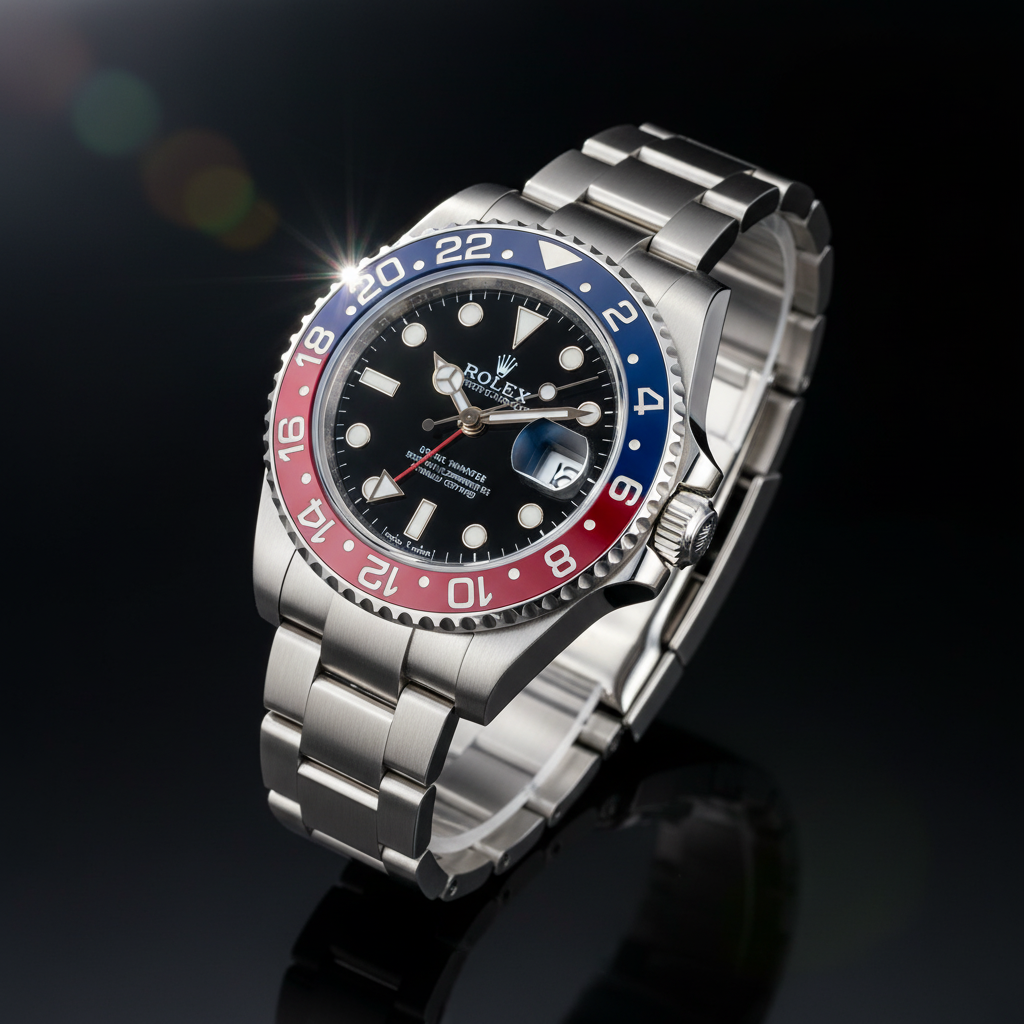

Rolex launched the Day-Date in 1956 as the first self-winding chronometer wristwatch to show both the date and the full day of the week in a window on the dial. It was made only in precious metals from the start, and the fluted bezel and the three-link President bracelet became the visual signature that everyone recognizes. Nearly seventy years later, the Day-Date is still cut from 18k gold or platinum, with no steel version ever offered. That makes it unusual among Rolex models, and it makes the question of value unusual too. A sports Rolex is priced almost entirely as a collectible. A Day-Date is priced as a collectible and as a significant quantity of precious metal at the same time.
Sellers in New York often fall into one of two traps. Some assume the watch is worth little more than its gold weight and are ready to accept a scrap-style number. Others assume that because it is a Rolex, any Day-Date will bring a premium price. The truth sits between the two, and it depends on details you can check yourself before you walk into an appraisal.
Why the Day-Date Is Valued Differently From Other Rolex Models
Because the case, bezel, and bracelet are solid gold or platinum, a Day-Date has a built-in floor. Even a watch in poor cosmetic shape has real metal value, and that value moves with the live gold market rather than with watch-collector sentiment. For most Day-Dates in good condition, the watch itself is worth more than the metal alone, but the floor matters because it tells you what an offer should never fall below. If someone quotes you a figure that looks like melt value for a running, original Day-Date, that is a signal to ask how they got there.
A buyer who also refines gold in-house sees the watch from both directions. At Ideal Refiners, we can calculate what the metal is worth at current rates and compare it with what the watch commands as a watch. Since we refine ourselves, we are not passing the piece to a third-party refiner and taking a cut, so the metal side of the calculation is not eroded by a middleman. The offer then reflects whichever side is stronger for that specific watch.
Gold color and metal
Day-Dates come in yellow gold, white gold, rose gold (Rolex calls its version Everose), and platinum. Yellow gold is the classic and the most common. Platinum models carry an additional distinction: only the platinum Day-Date has historically been paired with the ice blue dial, which sets it apart. Platinum is also heavier and priced on its own market, so it is evaluated separately from gold. Tell the buyer exactly which metal you have, and if the clasp or bracelet markings are worn, expect the buyer to test it.
The Details That Move the Value
Reference and generation
The Day-Date has gone through many generations, from the 1803 of the 1960s and 1970s through the 18038 and 18238 of the 1980s and 1990s, the 118238 era around the turn of the century, and the 40mm models introduced in the 2010s. Each generation differs in movement, crystal, bracelet construction, and case size. Older models may be valued by collectors for their character, while newer ones are valued for their condition and modern specifications. The reference number is engraved between the lugs, usually visible once the bracelet is removed, and the buyer will read it along with the serial number to date the watch.
Dial type
Dial is one of the biggest swing factors on a Day-Date. Plain gold, champagne, and silver dials are common. Others are much less so: lacquered Stella dials from the 1970s, bark-finish and meteorite dials, factory diamond dials, and certain Roman numeral layouts. A genuine rare dial can lift the value well above a standard one. The catch is that dial authenticity is easy to get wrong, because refinished and aftermarket dials exist. A dial that has been repainted or swapped usually reduces the value rather than increasing it, which is why a buyer will examine the printing, the lume, and the hour markers under magnification.
Diamonds: factory versus aftermarket
Many Day-Dates are set with diamonds on the dial, bezel, or both. Rolex produced factory-set versions, and they are valued accordingly. But a large number of Day-Dates on the market carry diamonds added later by a third-party jeweler. Aftermarket stones do not carry the same premium, and in some cases they lower the offer because the original bezel or dial has been replaced. If you are not sure whether your diamonds are original, look for any paperwork that lists the configuration. The buyer will also be able to tell from the setting style and the fit of the stones.
Bracelet condition
The President bracelet is lovely, but it wears. Older versions with hollow links can stretch over decades of use, leaving the bracelet loose and sagging with visible play between links. Dents and dings in hollow links are costly to repair. Later bracelets with more solid construction hold up better. Check the clasp too, since the crown-engraved fold-over clasp can show wear or bending. A tight, evenly aged bracelet supports a stronger offer than a stretched one.
Case, bezel, and polish history
Gold is soft, so Day-Dates pick up scratches easily, and many have been polished over the years. Heavy polishing softens the lugs and the case edges and can wear down the fluting on the bezel, which collectors notice right away. A watch that still has sharp lug shoulders and crisp bezel flutes will be valued above one that has been polished repeatedly. If you are wondering whether to polish yours before selling, our advice is to leave it as is. A buyer would rather see honest wear than a fresh polish that removed metal.
Box, Papers, and Service History
The original box, warranty card, and booklets help, particularly on newer pieces where they support a complete set. Service receipts matter as well, because they show that the movement has been maintained. On older watches, papers are less common, and a Day-Date without them is still very sellable. What matters more is that the watch is original and runs well. Keep in mind that a missing set affects the offer less on a gold watch than on many steel models, because the metal content anchors the price. For a broader look at that question, see our guidance on selling a Rolex without box and papers.
How to Prepare Before You Sell
A little preparation protects you from being underpaid. Start with the basics and gather what you have:
- The watch itself, with its full bracelet and any extra links that were removed during sizing.
- The original box, warranty card, and any service or purchase paperwork.
- A note of the reference and serial number, if you can find them.
- Any information about aftermarket work, such as added diamonds, a replaced dial, or a refinished bezel.
- Valid government photo ID, which New York law requires for any sale.
Do not clean the watch aggressively, and do not have it polished, serviced, or restored just to sell it. Be upfront about anything you know has been changed. A buyer will find it quickly, and honesty gets you a cleaner, faster conversation. It also helps to get more than one opinion, so you can see how offers compare. Whichever buyer you visit, ask them to explain how they arrived at the number, including how they treated the gold content.
Spotting a Lowball Offer
The most common way sellers lose money on a Day-Date is by accepting a quote that treats the watch as scrap. Be cautious if a buyer will not weigh or test the piece in front of you, gives a number without examining the dial and movement, or pressures you to decide on the spot. Another warning sign is a buyer who cannot tell you whether the offer is based on the metal or the watch value. A fair buyer shows their work. They should tell you what they found, what it means for the price, and why, and you should be free to say no and walk out.
Selling Your Day-Date in New York City
If you have a Day-Date and want to know where it stands, we are glad to look at it. At Ideal Refiners, we appraise in front of you at no cost and with no obligation, working from live market rates and the specifics of your watch. Most appraisals take about 20 minutes, and if you accept our offer, we pay the same day by cash or bank transfer. You will find us at 70 Bowery #1.1, New York, NY 10013, on the edge of Chinatown and a short trip from the Financial District and the Diamond District. We are open Monday to Thursday from 10am to 5pm and Friday from 10am to 3pm. You can call us at (347) 970-1562 with questions before you come in.