Sorting through a parent's or grandparent's jewelry box is rarely simple. There is usually a mix of genuinely valuable pieces sitting right next to costume jewelry that only looks expensive, and almost nobody handed you a list explaining which is which. If you are in New York trying to figure out what to keep, what to sell, and what it is actually worth, you are not alone. Estate jewelry is one of the most common things we appraise at our Bowery location, and the process of making sense of it is more straightforward than most people expect once you know what to look for.
Why Inherited Jewelry Is Different to Sell
When you buy jewelry yourself, you usually know the karat, the stone, and roughly what you paid. Inherited pieces come with none of that context. A ring might be 14k or it might be gold-filled costume jewelry from the 1960s that looks nearly identical. A "diamond" pendant might hold a real stone, a synthetic, or simple cubic zirconia, and there is often no receipt, no appraisal, and no family member left who remembers where it came from. That uncertainty is exactly why so many people either underprice these pieces by selling them as scrap, or overestimate them based on how the jewelry looks and feels sentimentally.
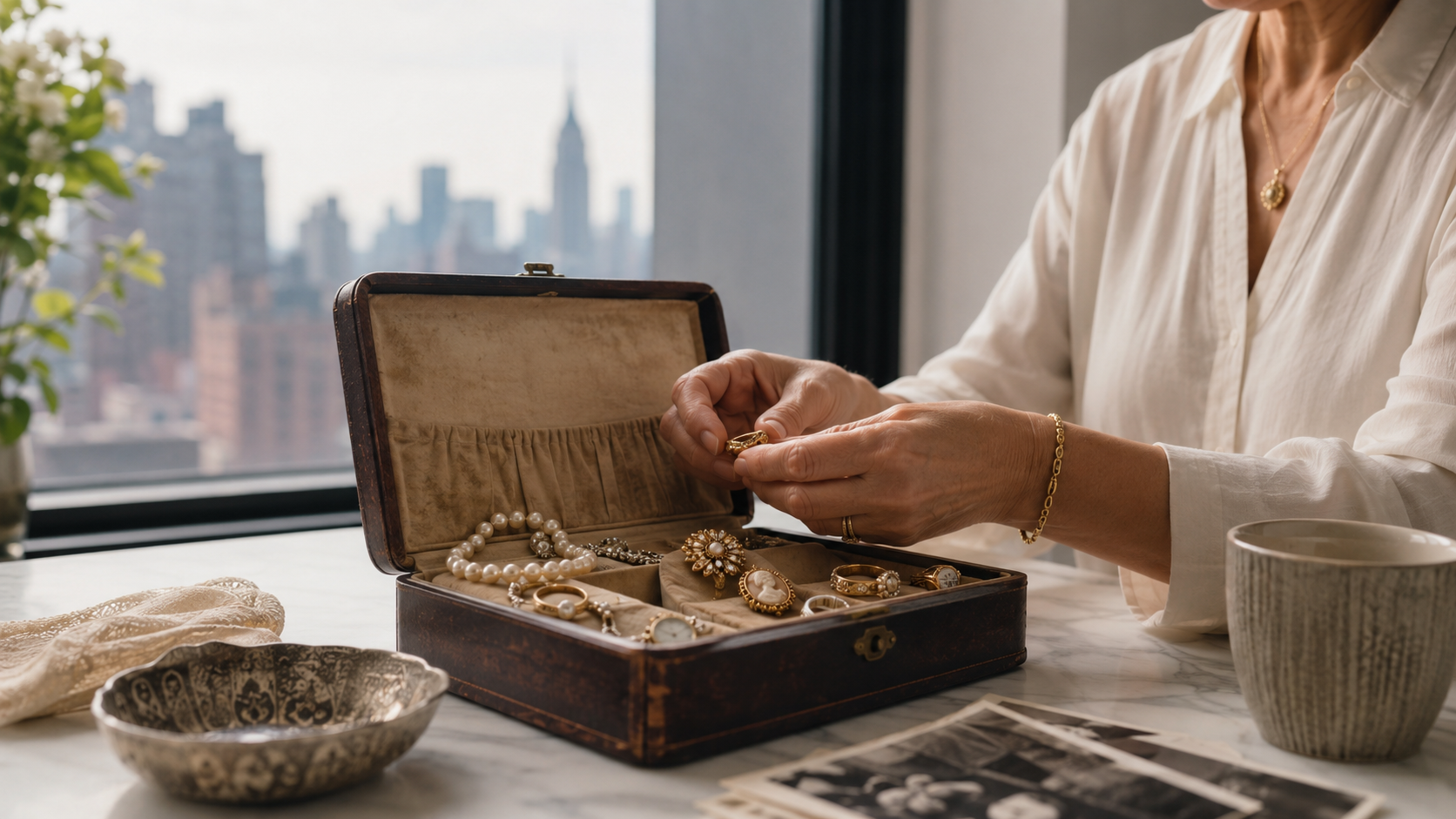
There is also an emotional layer that straightforward retail transactions do not have. Selling a piece that belonged to a grandmother can feel like a decision about her memory, not just about metal and stones. We see this constantly in Manhattan, where families are often settling an estate quickly, sometimes while also dealing with an apartment, a will, and other logistics. Separating the emotional weight from the actual market value of the piece is the first real step, and it usually makes the decision easier, not harder.
Step One: Sort Before You Sell
Before bringing anything in, spend twenty minutes doing a basic sort. You do not need expertise for this part, just a magnifying glass or your phone's camera zoom and a little patience.
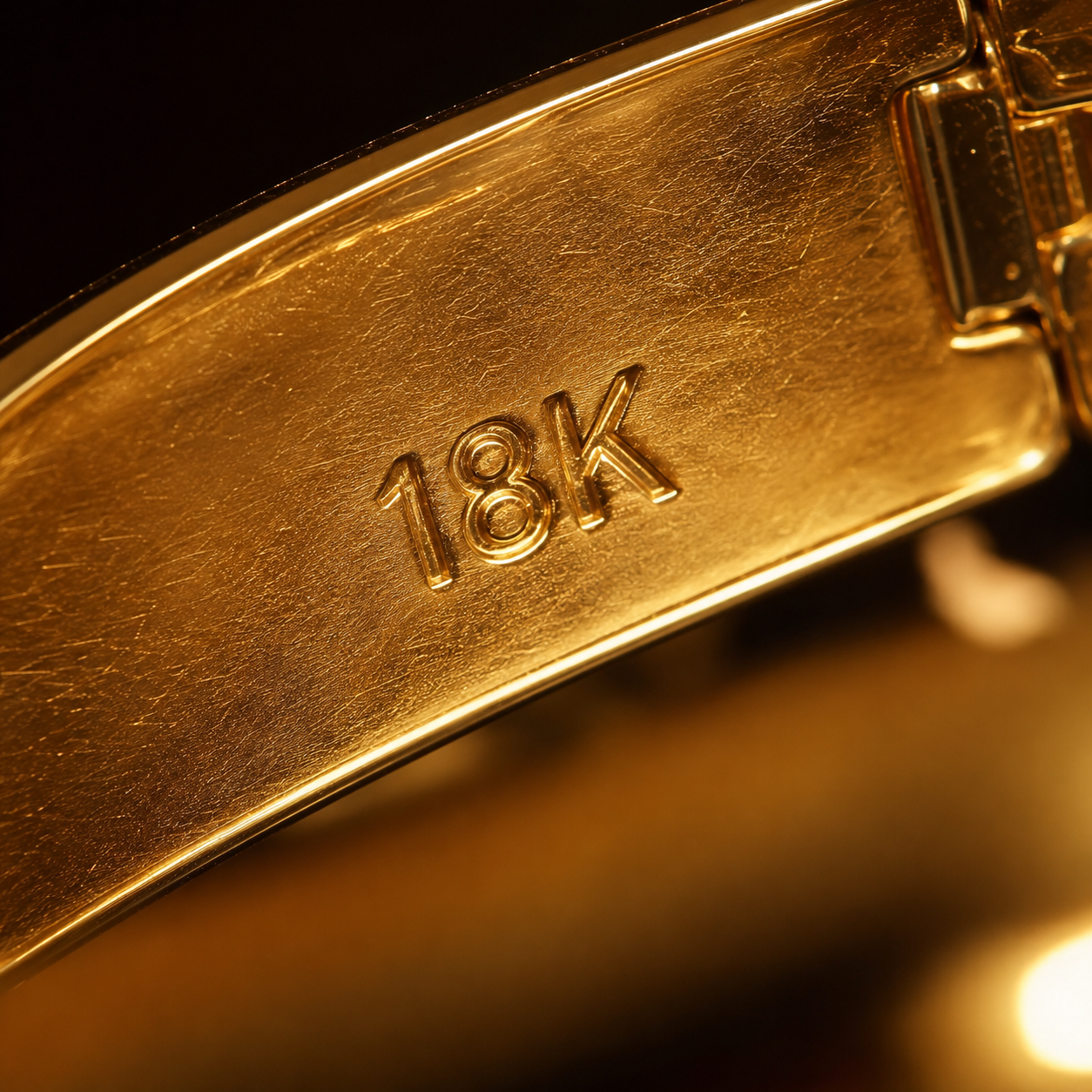
- Look for hallmarks. Gold is usually stamped 10k, 14k, 18k, or with numbers like 585, 750, or 916. Platinum is often stamped PT, PLAT, or 950. No stamp does not always mean fake, but it does mean it needs testing.
- Separate by metal color and weight. White gold, yellow gold, and rose gold are priced differently, and pieces that feel unusually light for their size are often gold-filled or gold-plated rather than solid.
- Set aside anything with stones. Diamonds, sapphires, rubies, and pearls all need to be looked at separately from the metal value, since a setting can be modest gold holding a genuinely valuable stone, or the reverse.
- Keep any paperwork you find. Old appraisals, insurance riders, or original boxes for watches and rings help confirm authenticity and can support a stronger offer.
This sort does not need to be perfect. The point is simply to group things logically so that when you sit down with a buyer, you already have a rough map of what you are holding instead of one undifferentiated pile.
How Gold Pieces Get Valued
Once you get to an actual appraisal, gold value comes down to two hard numbers: purity and weight, both measured directly rather than estimated. A reputable buyer will test the karat using acid testing or an electronic XRF machine rather than trusting the stamp, since stamps can be worn, mismatched from a repair, or occasionally inaccurate. Weight is taken on a certified scale in grams. Multiply the pure gold weight by the live market price per gram, and you have the baseline value before any adjustment for craftsmanship or brand.
Designer signed pieces, Cartier, Tiffany, Van Cleef & Arpels, and similar houses, can carry value above pure melt price because of demand for the piece itself, so it is worth mentioning any maker's mark you find. Unsigned estate pieces, on the other hand, are almost always valued on their gold content alone, which is not a bad thing. It simply means the calculation is transparent: known purity, known weight, known market price, and a fair payout follows directly from those three numbers.
How Diamonds and Colored Stones Get Valued
Loose or set diamonds are judged against the same 4Cs used industry wide: carat weight, cut quality, color grade, and clarity. Carat is straightforward to measure. Cut affects how much a diamond sparkles and is the hardest factor to judge without training, since two stones of the same size can look completely different depending on how well they were proportioned. Color is graded on a scale from colorless to noticeably yellow, and clarity refers to internal and surface characteristics visible under magnification.
Older inherited diamonds sometimes carry an old mine cut or old European cut, styles that predate modern round brilliants and can actually appeal to collectors and vintage buyers, adding value rather than subtracting it. Colored stones like sapphires and rubies are judged on saturation, tone, and whether they are natural or treated, since heat treatment and other enhancements are common and affect value even in genuinely natural stones. A qualified buyer should be able to explain, stone by stone, why they landed on a particular grade, not just hand you a number.
What Certification Does and Doesn't Do
If a stone has a GIA or AGS certificate, that document supports the grading and speeds up the appraisal, but its absence does not mean the diamond is worthless or fake. Most inherited jewelry has no certificate at all, and any working buyer in New York, whether Downtown, in the Diamond District, or elsewhere, should be equipped to grade an uncertified stone on the spot using a loupe or microscope. Be skeptical of anyone who tells you an uncertified stone cannot be evaluated fairly; that is usually a stalling tactic rather than an honest limitation.
Watches: The One Category Where Paperwork Matters Most
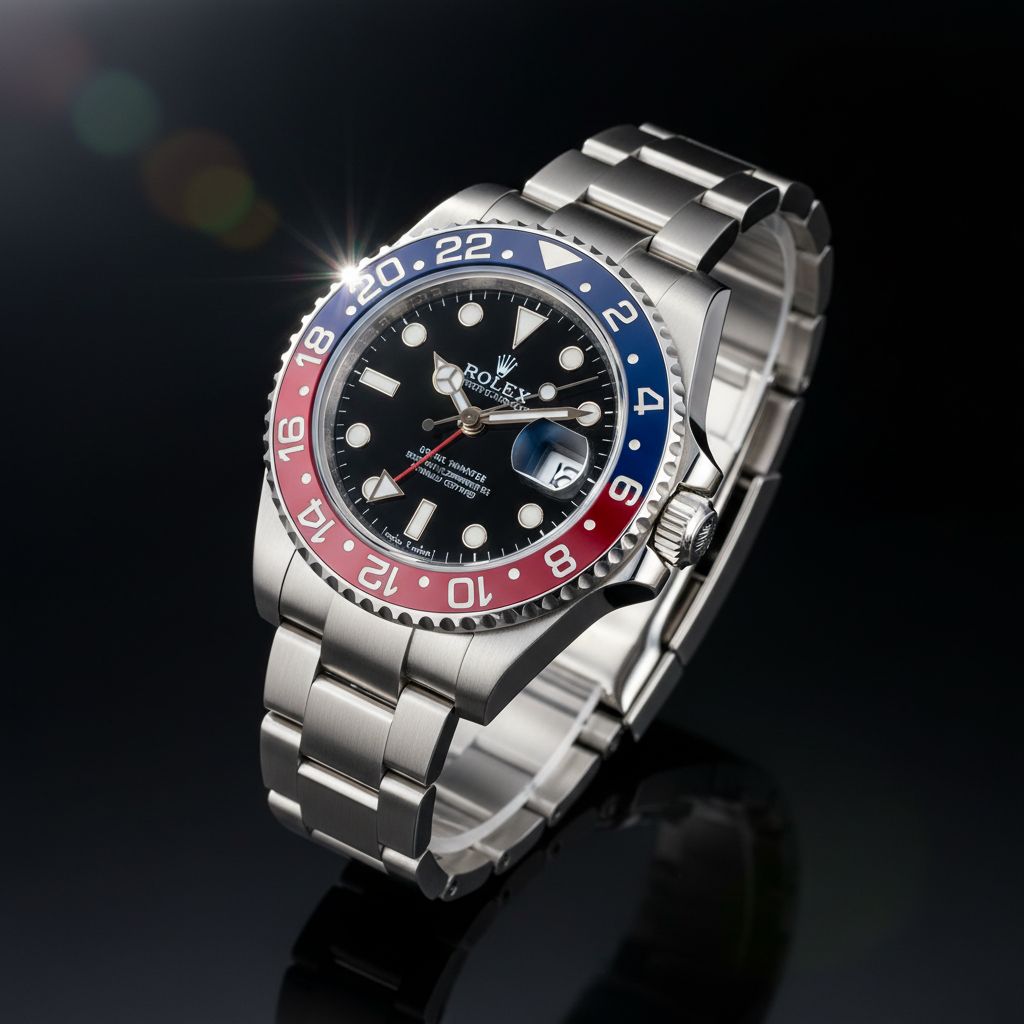
If the estate includes a watch, particularly a Rolex, Patek Philippe, Omega, or Cartier, treat it differently from the rest of the jewelry. Watch value depends heavily on the specific reference number, the originality of the dial, hands, and bracelet, and whether the movement is running or in need of service. Box and papers add value when present, but plenty of inherited watches were worn daily and never kept with their packaging, and that alone does not disqualify a strong offer. What matters more is whether all the parts on the watch are original to that reference or whether components have been swapped over the decades, since aftermarket parts can meaningfully reduce value.
Do not attempt to clean, polish, or "fix" an inherited watch before selling it. Well-meaning polishing can round off case edges and reduce collector value, and an amateur battery swap or repair on a vintage piece can introduce problems that are expensive to reverse. Bring it exactly as you found it and let a specialist assess it in its original condition.
Why an In-House Refiner Is the Right Buyer for Estate Pieces
Estate jewelry is exactly the category where the difference between an in-house refiner and a middleman shows up most clearly. A consignment shop or a general jewelry store that resells to the public has to build in enough margin to cover the time and risk of finding a retail buyer, and that margin comes directly out of your payout. At Ideal Refiners, we buy directly and process gold and platinum ourselves, and we evaluate diamonds and colored stones in-house rather than sending them out to a third party and waiting on someone else's number. That means the offer we make is based on live market rates and our own direct costs, not on a retail markup we need to protect.
It also means we are set up to handle exactly the mixed, uncertain pile that a typical estate produces: some solid gold, some gold-filled, a loose diamond or two, maybe a signed designer piece, maybe a watch that has not run in years. You do not need to pre-sort everything into neat categories or figure out values yourself beforehand. Bring what you have, and each piece gets assessed on its own terms.
What to Bring and What to Expect
New York State law requires a valid government-issued photo ID for any purchase of jewelry, gold, or watches, so bring a driver's license or passport along with the items themselves. There is no need to clean anything, remove stones, or separate metals ahead of time. Most appraisals at our location take around twenty minutes per item or grouping, and because the appraisal is free and comes with no obligation, you are welcome to hear the offer and walk away if you want to think it over, get a second opinion, or simply are not ready to sell yet.
If you do decide to sell, payment is made the same day, either in cash or by bank transfer, so there is no waiting period and no consignment arrangement where you get paid only after someone else buys the piece from a shop. For families settling an estate on a timeline, that same-day certainty is often as valuable as the payout itself.
Ready to Have Your Estate Jewelry Appraised?
If you have inherited jewelry sitting in a drawer or a safe deposit box and want a straight answer about what it is actually worth, bring it to Ideal Refiners at 70 Bowery #1.1 in Downtown Manhattan. We are open Monday through Thursday from 10am to 5pm and Friday from 10am to 3pm, and you can reach us at (347) 970-1562 with any questions before you come in. There is no cost and no pressure to sell on the spot, just a clear, honest appraisal so you can make the decision that is right for your family.