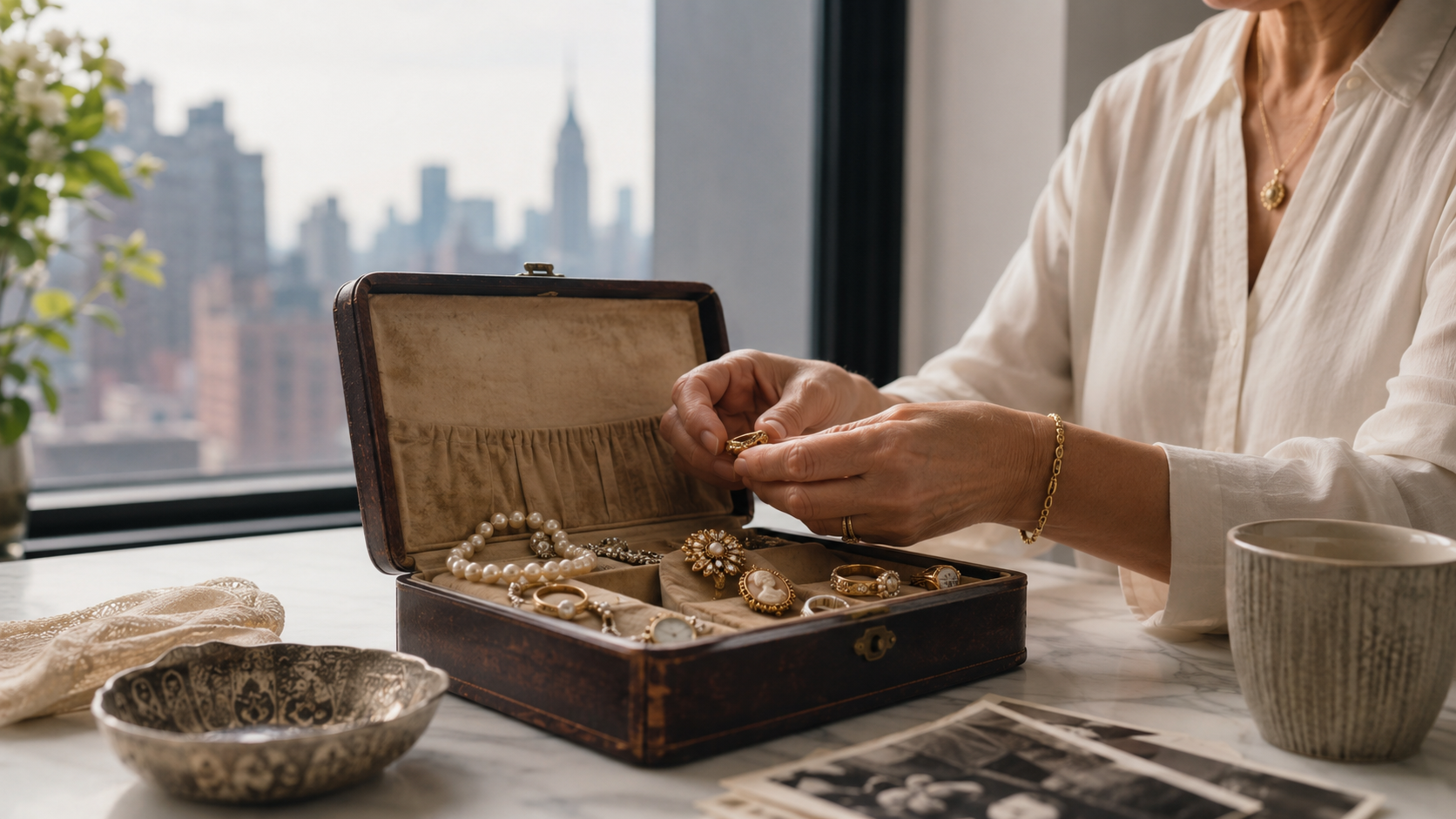
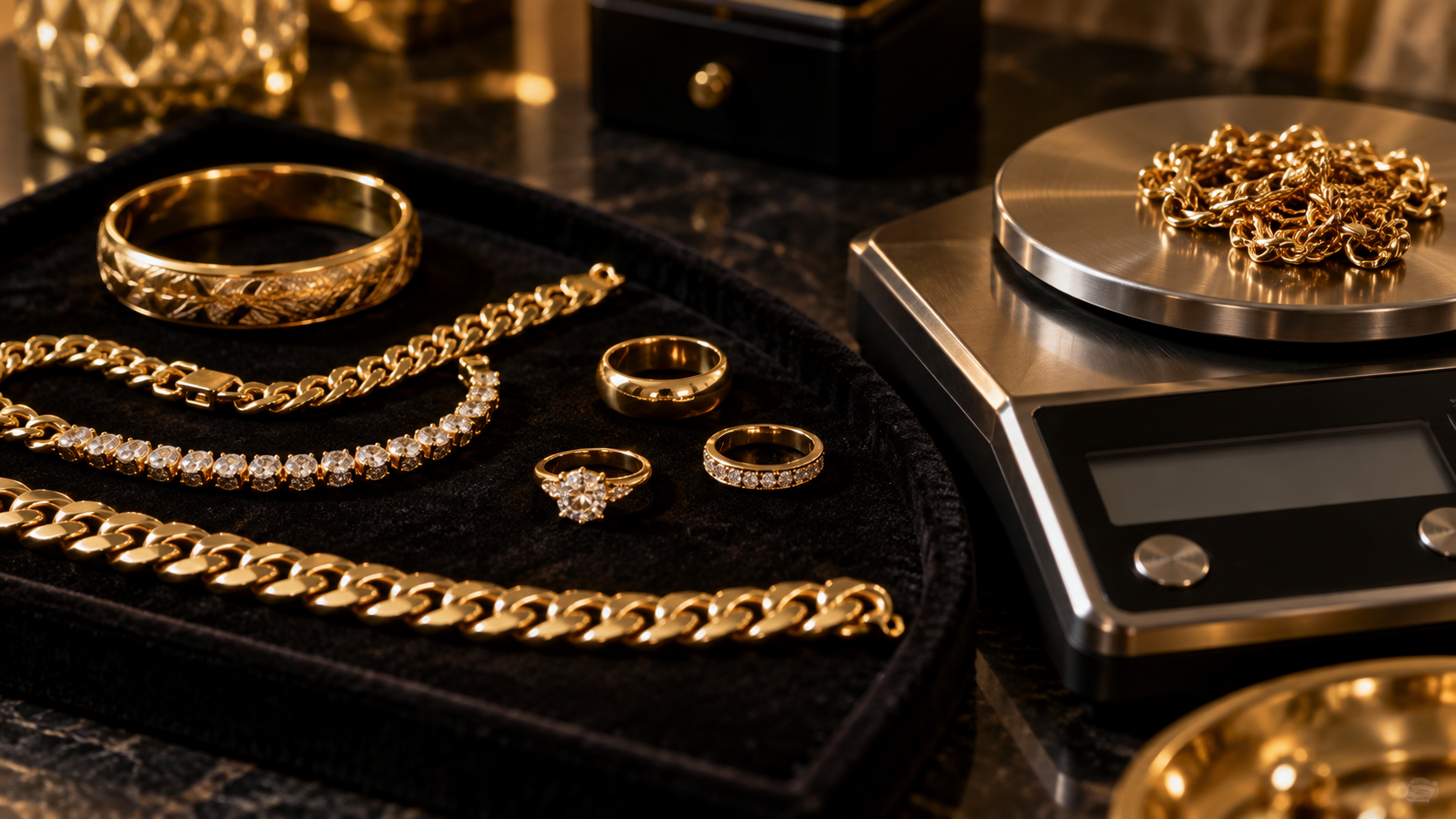
Platinum was a late arrival in jewelry. Jewelers struggled for centuries to work it because of its extreme melting point, which sits above 1,750 degrees Celsius, and it only became a favorite of fine jewelers in the early 1900s, once the oxyacetylene torch made it workable. Cartier and other Paris houses used it for the delicate, lace-like settings of the Edwardian and Art Deco eras, and platinum has been tied to diamond jewelry ever since. Today it turns up constantly in the engagement rings, wedding bands and inherited pieces that sellers bring to us in Manhattan. The common question is whether platinum is worth more than gold. The honest answer is that it depends on the day, the purity, the weight, and whatever else is set into the piece.
Why Platinum Is Valued Differently From Gold
Platinum has its own market price, quoted separately from gold and moving independently of it. At times it has traded well above gold, and at other times well below, so you cannot assume anything from the fact that a ring is platinum rather than yellow or white gold. What you can count on is that platinum jewelry is usually made to a high purity, most often 95 percent, and that it is physically heavy. Pure platinum has a density of about 21.4 grams per cubic centimeter, noticeably higher than the roughly 19.3 of pure gold. A platinum band feels weightier in the hand than a gold band of the same size, and that extra mass counts when the piece goes on the scale.
The other difference is how platinum wears. When gold is scratched, a little metal is lost over time. When platinum is scratched, the metal is mostly displaced and develops a soft gray patina. This is why a decades-old platinum ring often still holds its original weight, and why prongs on well-worn pieces can be thinner than they look. A buyer will check the condition of the setting, but the metal itself is rarely the problem.
Reading the Platinum Hallmark
Common stamps and what they mean
Look inside the band, on the clasp, or on the back of a pendant, and you may find one of several marks. 950 Plat, PT950 or Plat means the piece is 95 percent platinum, which is the modern standard. 900 Plat or PT900 means 90 percent, often seen in older European and mid-century work. Irid-Plat or Plat-Irid points to an iridium-platinum alloy, common in pieces from the first half of the twentieth century, where iridium was added for hardness. Each stamp changes how much pure platinum is actually in the piece, and therefore what it can be refined into.
Stamps that are not purity marks
Here is where sellers sometimes get confused. A stamp such as Plat .75 ctw or Pt 1.20 usually describes the total weight of the diamonds, not the metal. The number is a carat weight and has nothing to do with purity. Makers' marks, serial numbers and retailer names (such as Tiffany & Co. or Cartier) are common as well, and they can matter for value even though they say nothing about the metal.
Lookalikes: palladium and white gold
Two materials are regularly mistaken for platinum. White gold is stamped 10k, 14k or 18k and is usually rhodium-plated, so it can look identical when new. Palladium, a related metal from the same family, is sometimes marked PD950 or 950 Pall. It looks like platinum and is lighter, and it is priced on its own market. This is one reason why a buyer tests the metal rather than reading the stamp alone. A stamp tells you what the maker claimed, and testing confirms what is really there.
How Weight and Purity Become a Payout
The basic math is simple. Platinum is weighed in grams (or in troy ounces, where one troy ounce equals 31.1035 grams). That weight is multiplied by the purity to find the pure platinum content. A piece of 950 platinum that weighs ten grams on the scale contains nine and a half grams of pure platinum. That figure, compared against the live market rate, gives the refined metal value, which is the ceiling for what a buyer can reasonably pay for the metal alone.
Two things trim that ceiling. First, any stones and non-platinum parts are separated out, because their weight is not platinum. A ring with a 1 carat center stone and a dozen small accent diamonds weighs much less in actual metal than it does on the scale. Second, a buyer has to cover the cost of refining and the risk of price movement. This is where the business model matters. A buyer who sends platinum to an outside refiner is working in a margin for that third party. We refine in-house at Ideal Refiners, so there is no middleman between your piece and the melt, which leaves more room in the offer.
One more practical note: platinum prices can move meaningfully within a week. If you are comparing offers, compare them on the same day, and be skeptical of any buyer who will not tell you how the number was reached.
When Platinum Is Worth More Than the Metal
Not every platinum piece should be treated as scrap. A platinum engagement ring with a well-cut, well-graded diamond is usually worth more as a ring, because the stone can be valued on its cut, color, clarity and carat weight and the setting can be considered separately. If the diamond comes with a GIA or other lab report, bring it. The report makes the assessment faster and removes guesswork about the stone.
Estate and antique platinum is a separate case. Pieces from the Edwardian and Art Deco periods often show milgrain edging, hand-pierced filigree and old European or old mine cut diamonds, and a collector or designer buyer can place a premium on that craftsmanship. Signed work from houses like Cartier, Tiffany & Co., Van Cleef & Arpels or Harry Winston can add value on top of the metal and stones. A dented, lightly worn piece is fine. A fresh polish is not necessary, and a heavy-handed re-plating or re-tipping of prongs rarely raises an offer. If you are unsure whether your piece is a design with real maker value or a standard mounting, a free appraisal will tell you which category it falls into.
How to Avoid Being Underpaid
- Insist on seeing the test. A reputable buyer will test the metal in front of you and explain the result, not whisk the piece into a back room.
- Ask for the weight and purity. You should hear the gram weight and the purity the buyer is using, so you can check the math yourself.
- Know the difference between metal value and piece value. If the ring has a good diamond or a famous maker's name, an offer based on melt value alone is leaving something out.
- Check the live rate. Platinum is quoted daily. A buyer who cannot say what rate they are working from is a red flag.
- Do not rely on the stamp alone. Fakes and mislabeled plated pieces exist, and honest sellers lose nothing from a proper test.
- Avoid pressure. A fair offer will still be fair after you have taken a few minutes to think about it.
It also helps to be realistic about location. Shops in the Diamond District on 47th Street, the jewelers around Chinatown and the Bowery, and the buyers near the Financial District all price differently. Visiting more than one is reasonable. What matters is that each offer is explained, and that you leave knowing what you were paid for.
What to Bring and What to Expect
Bring the piece itself, and anything that came with it: original box, receipts, appraisals, grading reports and any warranty or service cards. Documents are not required, but they can help support the value of a signed or certified piece. New York law requires a valid government-issued photo ID for any sale, so bring a driver's license, passport or state ID with you.
At Ideal Refiners, the appraisal is free and carries no obligation. Most items take about 20 minutes. We examine and test the piece in front of you, explain the purity, the weight and how the stones were assessed, and give you an offer based on live market rates. If you accept, payment is the same day, in cash or by bank transfer. If you decide not to sell, you walk out with no charge and no pressure.
If you have a platinum ring, bracelet or inherited piece sitting in a drawer and are curious what it would bring, come see us at 70 Bowery #1.1, New York, NY 10013. We are open Monday through Thursday from 10am to 5pm, and Friday from 10am to 3pm. You can also call (347) 970-1562 with questions before you come in.