Selling a diamond feels different from selling gold. There is no scale you can watch and no simple weight-times-price math to check against a phone calculator. A diamond's value comes from a combination of factors that most people have heard of but never actually seen applied to their own stone. If you are holding a ring, a pair of studs, or a loose diamond from an old setting and wondering what a New York buyer will actually offer, understanding how that number gets built is the difference between accepting a lowball offer and knowing exactly what you are being paid for.
At our Bowery location, we appraise diamonds every day for people coming from the Financial District, Chinatown, and neighborhoods well outside Manhattan who have heard that a direct buyer, rather than a retail counter or the Diamond District's wholesale maze, tends to give a more transparent number. The appraisal itself takes about 20 minutes for most single stones and rings, and it is free whether or not you decide to sell. What follows is a real explanation of what happens during those 20 minutes.
The 4Cs, and What They Actually Mean for a Payout
Every diamond grading conversation starts with the 4Cs: carat, cut, color, and clarity. These are not marketing terms invented by jewelers. They come from the Gemological Institute of America (GIA), and they form the standardized language that buyers, sellers, and labs around the world use to describe a stone consistently. Understanding what each one actually does to price, rather than just what it means in theory, is what lets you sanity check any offer you receive.
Carat Weight
Carat measures weight, not size, though the two are related. One carat equals 0.2 grams. Price does not scale in a straight line with weight. A 2 carat diamond is typically worth considerably more than two separate 1 carat diamonds of the same quality, because larger rough stones are rarer and the finished diamond carries a premium for crossing certain size thresholds (0.50, 1.00, 2.00 carats especially). This is also why a stone that weighs 0.97 carats can be priced noticeably differently than one at 1.01 carats, even though the visual difference is invisible to the eye.
Cut
Cut refers to how well the diamond's proportions, symmetry, and polish allow it to interact with light. A well cut diamond returns more brilliance and fire, and GIA grades cut from Excellent down to Poor for round brilliants. Cut is frequently underestimated by sellers who assume clarity or color drives everything. In practice, a poorly cut stone can look duller and smaller than its carat weight suggests, and that visibly affects what a buyer is willing to offer, because it affects what the stone can resell for.
Color
For traditional white diamonds, color is graded on a scale from D (completely colorless) to Z (noticeably yellow or brown). Most jewelry you will encounter falls somewhere in the G to J range, which looks white to the naked eye in a ring setting but carries a lower price than a D or E stone of the same size and clarity. Fancy colored diamonds (yellow, pink, blue, and so on) are graded on an entirely different scale and are a specialized category on their own, generally requiring their own certification and expert evaluation.
Clarity
Clarity measures internal and surface characteristics, called inclusions and blemishes, on a scale from Flawless down to Included (I1, I2, I3). Most inclusions are microscopic and invisible without 10x magnification. What matters for a payout is whether the inclusion affects the stone's durability or its appearance to the naked eye. A diamond graded VS1 or VS2 (very slightly included) often looks identical to a Flawless stone in person but sells for meaningfully less, which is part of why clarity grade matters more to a buyer's math than it does to how the ring looks on your hand.
Certification Changes Everything
A diamond with a GIA or AGS certificate is a known quantity. The lab has already measured the stone, verified it is natural or lab grown, and assigned grades that any buyer in the world can trust without redoing the work. That certainty translates directly into a faster, cleaner, and typically stronger offer, because the buyer is not taking on the risk and cost of independently verifying everything from scratch.
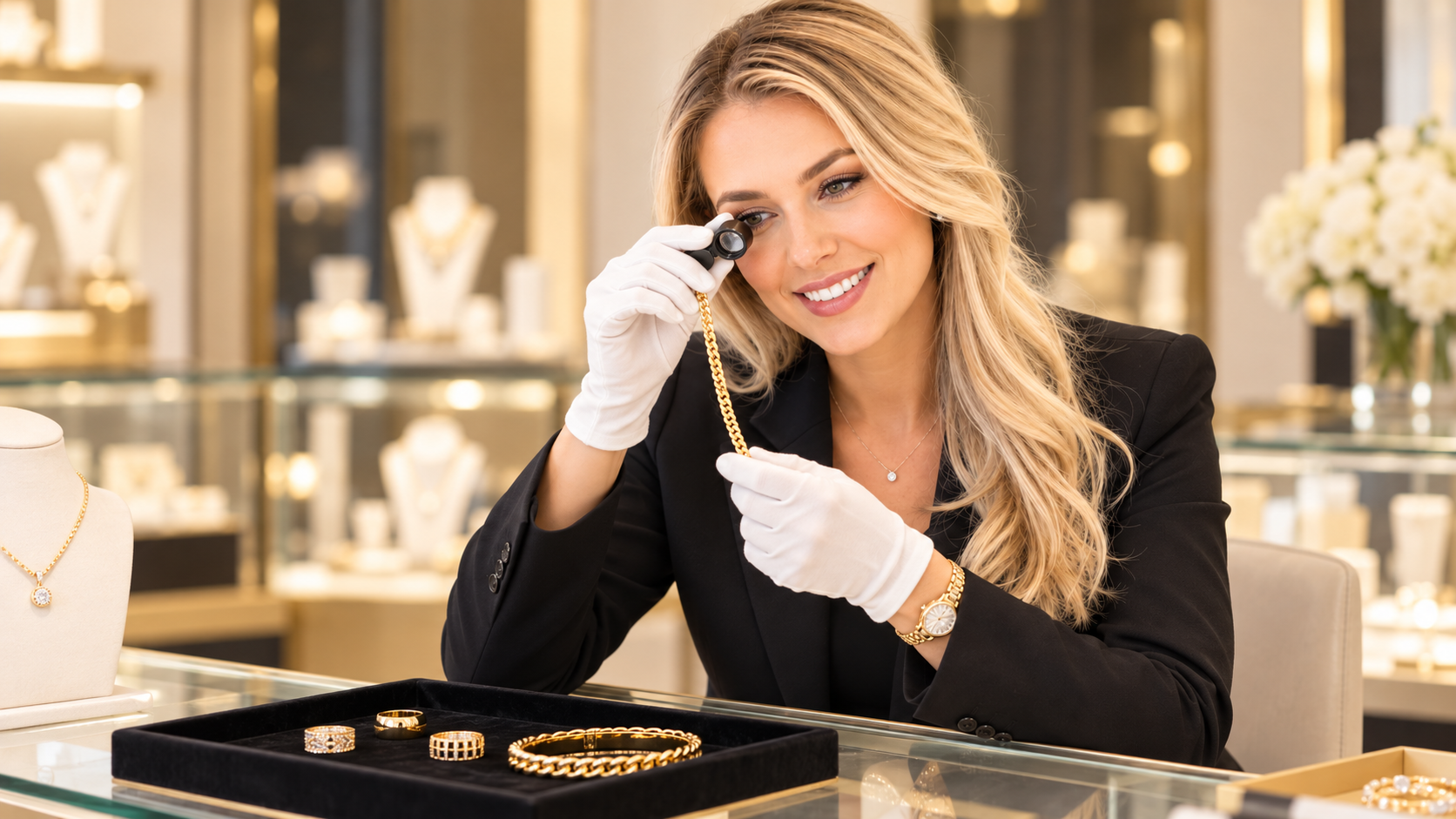
Uncertified stones are not worthless, and the vast majority of diamonds we see at our Bowery office do not come with paperwork. Engagement rings bought decades ago, especially from smaller jewelers, were often never sent out for grading. In these cases, our in-house team examines the stone under magnification on the spot, using the same 4C framework, and gives you a grade-based estimate as part of the same 20 minute appraisal. If a stone appears to be a size or quality where formal certification would meaningfully change the offer, we will tell you that directly rather than quietly pricing around it.
Natural vs Lab Grown: A Real Price Difference
Lab grown diamonds are chemically and optically identical to natural diamonds, and modern equipment can distinguish between them reliably. The market treats them very differently, though. Lab grown stones currently sell for a fraction of what an equivalent natural diamond commands, and that gap has widened as lab grown production has scaled up. If your stone came from a retailer within the last several years, it is worth asking directly whether it is natural or lab grown, since that single fact affects the offer more than almost any other variable on this list.
The Setting Rarely Adds Much
People are often surprised that an elaborate ring setting does not add much to a diamond's resale value beyond the metal content itself. A refiner buying your ring is generally pricing the stone on its own merits and the gold or platinum separately by weight and purity. Intricate designer settings, hand engraving, and brand names (outside of a small handful of houses like Cartier or Tiffany, where the setting itself can carry collector value) mostly matter to a retail buyer, not to someone purchasing for melt and resale value. If your ring has real designer provenance, say so during the appraisal, since that is exactly the kind of detail an appraiser needs to price it correctly.
Why an In-House Buyer Can Offer More
Many of the businesses buying diamonds in New York, including plenty of storefronts in the Diamond District, are not the end buyer. They appraise your stone, then resell it to a wholesaler, a cutter, or another dealer, and each step in that chain takes its own margin before your diamond even reaches its next owner. Every one of those margins gets subtracted from what you are offered, because the person across the counter has to protect their own profit before they even pass the stone along.
Ideal Refiners buys directly and keeps the stone or resells it through our own established channels, without a chain of middlemen between your appraisal and the final sale. That structure lets us offer a number closer to true market value rather than a wholesale price minus several layers of markup. It is the same logic that applies to gold refining, just adapted to how diamonds move through the market.
What to Bring, and How to Avoid Getting Underpaid
Bring the diamond itself, any GIA or AGS certificate you can find, the original sales receipt if you still have it, and a government-issued photo ID, which New York State law requires for these transactions. If the stone is in a ring, bring the ring as is rather than removing it yourself. A jeweler can safely examine a mounted stone without damaging the setting, and removing it improperly at home can chip a prong or loosen the stone entirely.
To avoid being underpaid, get more than one appraisal if you have any doubt, and pay attention to whether the person appraising your stone explains the 4C grades they are assigning or simply hands you a number with no reasoning behind it. A legitimate buyer will show you the stone under magnification, walk you through what they are seeing, and explain how carat, cut, color, and clarity combine into the figure they are offering. If a buyer refuses to explain their reasoning or rushes you through the process, treat that as a signal to get a second opinion before you sign anything.
Stop by 70 Bowery for a Free, No-Obligation Appraisal
If you have a diamond ring, loose stone, or set of earrings you are thinking about selling, come by our office at 70 Bowery #1.1 in Downtown Manhattan. We will examine the stone under magnification, walk you through the 4Cs as we see them, and give you a clear cash or bank transfer offer, usually within about 20 minutes. There is no obligation to sell, and no pressure either way. We are open Monday through Thursday from 10am to 5pm and Friday from 10am to 3pm, and you can reach us at (347) 970-1562 with any questions before you come in. Just remember to bring a government-issued photo ID, as New York law requires it for these transactions.