Gold coins and bars sit in a strange middle ground for most sellers. They feel more official than a tangled gold chain pulled from a jewelry box, since they usually come stamped with a purity, a weight, and sometimes a mint mark that suggests a fixed, knowable value. But pricing a coin or a bar is not as simple as multiplying a number on the internet by the weight in your hand. There are a few extra variables at play, and understanding them before you walk into a buyer's office in Manhattan will help you recognize a fair offer when you see one.
Why Coins and Bars Are Priced Differently Than Jewelry
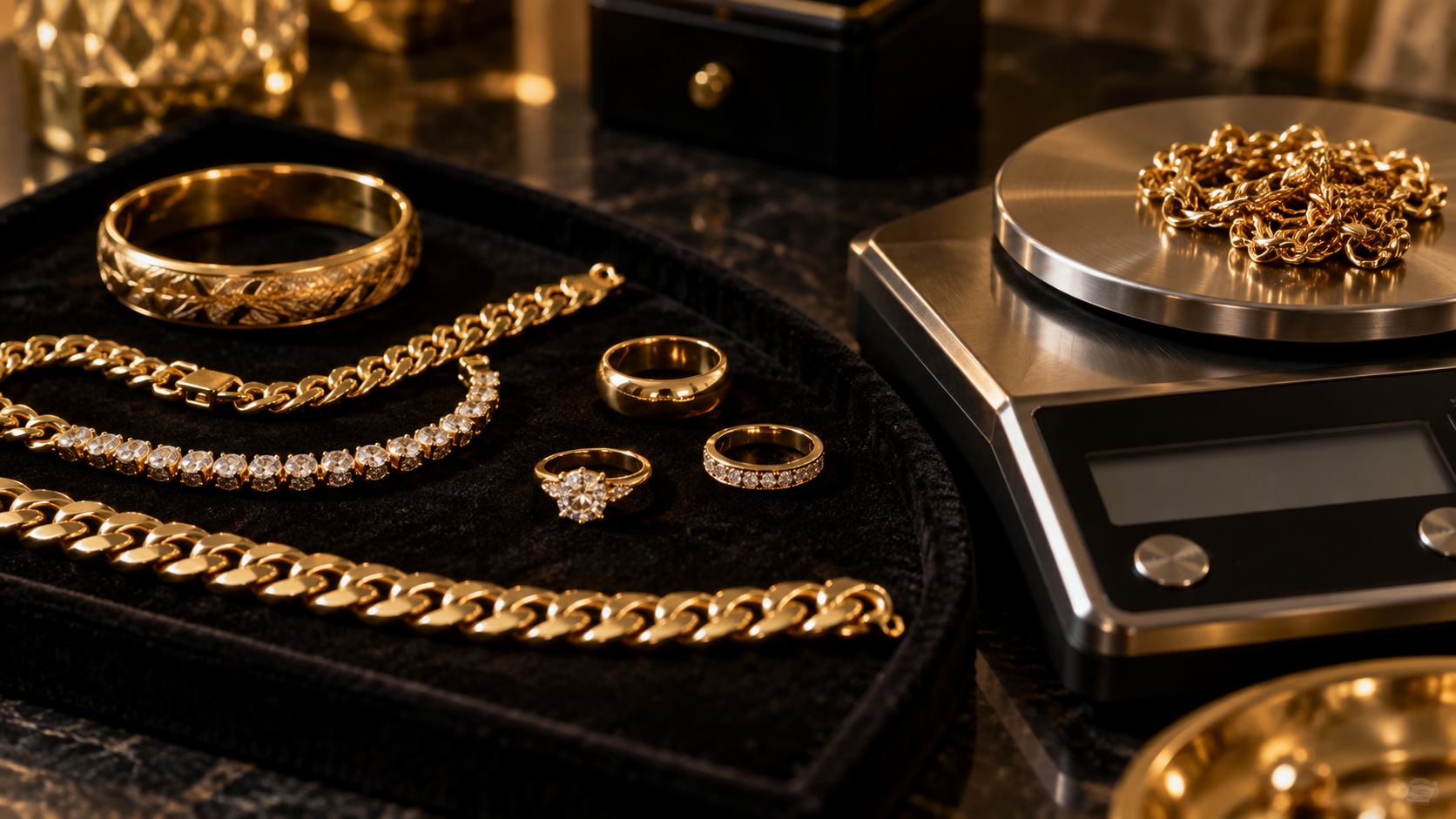
Jewelry almost always needs to be melted down and refined before it becomes usable gold again, because rings, chains, and bracelets are alloyed with other metals and often carry solder, prongs, or gemstone settings that have to be separated out first. Bullion coins and bars, on the other hand, are already close to pure gold in a known, verified form. A one ounce American Gold Eagle or a Credit Suisse bar does not need to be melted down and re-assayed the way a scrap gold necklace does, because its purity and weight are already certified by the mint or refiner that produced it.
That difference matters for pricing. Because bullion is already in a trusted, recognizable form, it trades much closer to its true melt value, sometimes with almost no discount at all. Jewelry, by contrast, almost always sells below its theoretical melt value because a buyer has to account for the cost and effort of refining it. If you are holding investment-grade coins or bars, you are starting from a stronger position than someone selling a used gold ring, and a knowledgeable buyer should reflect that in the offer.
How the Base Value Gets Calculated
Every gold coin or bar transaction starts with the same two numbers: the live spot price of gold and the exact fine gold content of the piece. Spot price moves throughout the trading day based on global markets, so the number you see quoted on a Tuesday morning will not be the same number by Tuesday afternoon. A serious buyer will check that live price at the time of your appointment, not rely on a figure from days earlier, because even a modest swing in spot price changes the payout on larger quantities meaningfully.
Fine gold content is the second half of the equation. Most bullion coins and bars are stamped with their purity, usually .999 or .9999 fine, along with their weight in troy ounces or grams. A one ounce coin at .9999 fine contains essentially one full troy ounce of pure gold, so the math is close to spot price times weight, minus whatever premium or discount applies to that specific product. Older or foreign coins sometimes use different purity standards, such as .900 or .916, which is common on coins like the South African Krugerrand or older European gold coins, so the buyer has to adjust the calculation accordingly rather than assuming every coin is pure gold.
Common Coins Sellers Bring In
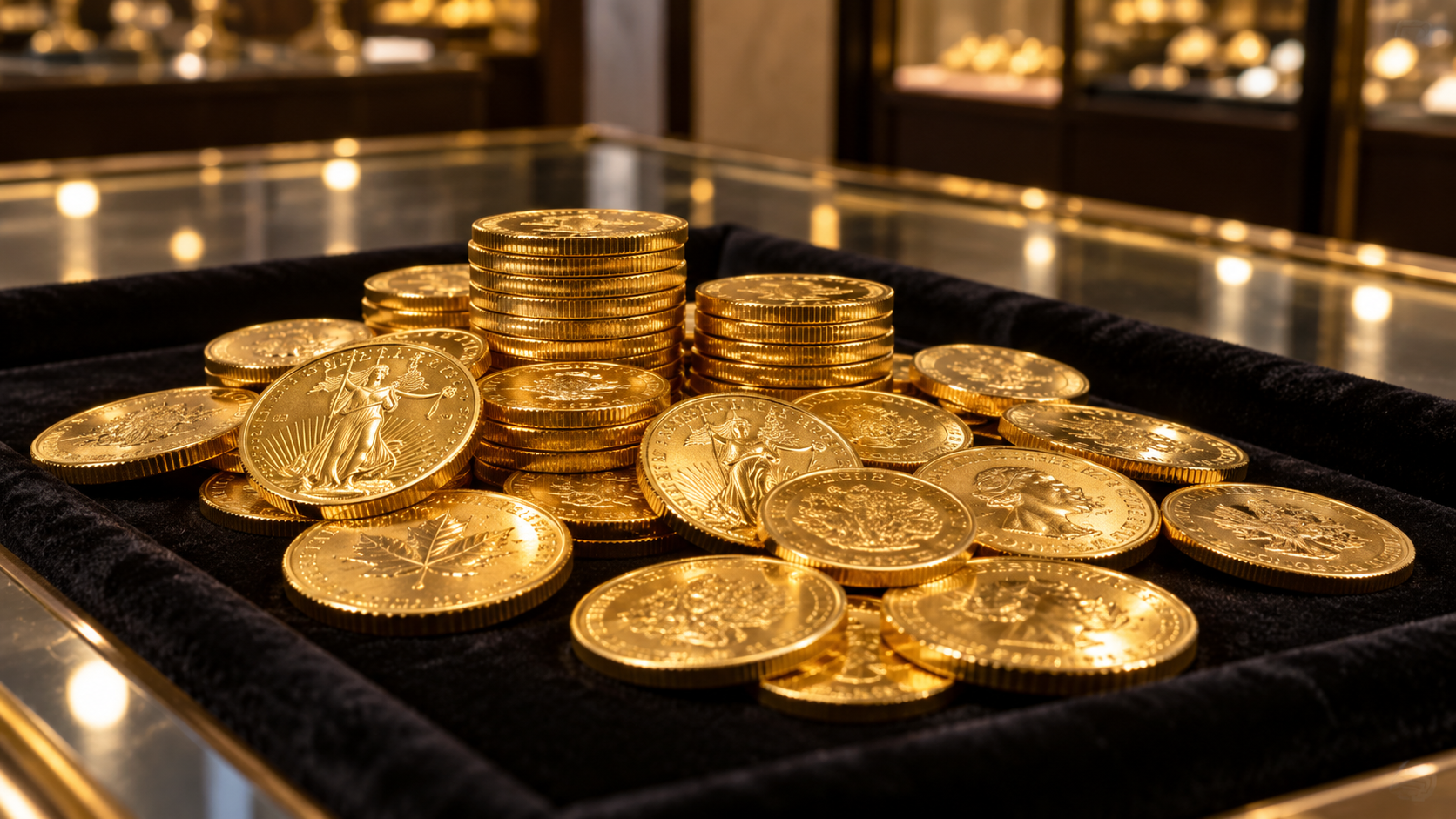
In New York, the coins that come across the counter most often include American Gold Eagles, Canadian Maple Leafs, South African Krugerrands, and older U.S. gold coins like Double Eagles or Liberty Head pieces inherited from a parent or grandparent. Eagles and Maple Leafs are straightforward because their purity and weight are standardized and universally recognized. Older U.S. gold coins require a bit more care, since some of them carry collector premiums well above their melt value depending on date, mint mark, and condition, and a buyer who only looks at the gold content is potentially leaving money on the table for you or for themselves.
Bars and Rounds
Gold bars from recognized refiners such as PAMP Suisse, Valcambi, or the Perth Mint typically carry a serial number and an assay card confirming purity and weight. These are among the easiest items to price accurately because there is little ambiguity involved. Generic or unbranded rounds without documentation take a bit more verification, since a buyer needs to confirm the actual gold content before making an offer, but a legitimate in-house refiner has the equipment to test purity on the spot rather than asking you to take their word for it or send it out for testing.
When Numismatic Value Changes the Picture
Not every gold coin is worth exactly what its gold content suggests. Some coins carry collector or numismatic value on top of their melt value, driven by rarity, historical significance, mintage numbers, or condition graded by services like PCGS or NGC. A common date American Gold Eagle in circulated condition is almost always going to be priced close to its bullion value, since millions were minted and collectors do not pay a significant premium for them. But a rare date Double Eagle in uncirculated condition, or a coin with a documented mint error, can be worth considerably more than its weight in gold to the right buyer.
This is one area where sellers genuinely benefit from an honest appraisal rather than a quick weigh and pay. If you inherited a collection of older coins and have no idea which ones might carry collector premiums, it is worth having them looked at individually rather than assuming they are all priced the same way. A buyer who takes the time to check dates, mint marks, and condition before quoting you a number is doing right by you, even if most of the coins in the batch end up pricing out at standard bullion rates.
Why Selling to an In-House Refiner Makes a Difference
Many gold buyers in New York City, including some storefronts in the Diamond District and along Canal Street, do not actually refine anything themselves. They buy from the public and then resell to a refinery or a larger dealer, which means their offer has to leave room for that middleman's cut before it ever reaches you. When a buyer refines in-house, like we do at Ideal Refiners on the Bowery, there is no third party taking a slice of the transaction, and that savings can be passed directly into the number you are offered.
In-house testing also means faster, more transparent verification. Instead of sending your coins or bars out for assay and asking you to wait days for a result, an in-house buyer can test purity on the spot using equipment like XRF analyzers, confirm the weight on a certified scale in front of you, and walk you through exactly how the number was calculated. That transparency is worth something on its own, especially if you have never sold bullion before and want to understand what you are agreeing to.
How to Avoid Being Underpaid
The most common mistake sellers make is not checking the live spot price before their appointment. It takes thirty seconds to look up the current gold price per ounce, and knowing that number gives you a rough benchmark to compare against whatever offer you receive. You should also separate your coins by type before you arrive, since mixing standard bullion coins with potentially rare or older pieces in one pile makes it easy for a rushed buyer to price everything at the lowest common rate rather than evaluating each piece properly.
If you have any paperwork, certificates of authenticity, original mint packaging, or grading slabs from PCGS or NGC, bring all of it. Documentation does not just support a higher price on collector coins, it also speeds up the verification process for standard bullion, since a buyer can confirm authenticity more quickly when the original assay card or mint certificate is in hand. Finally, do not be afraid to ask a buyer to explain their math. A legitimate buyer will happily walk you through spot price, purity, and weight, and any hesitation to do that is a signal to get a second opinion before you sell.
What to Bring to Your Appointment
Bring the coins or bars themselves, any certificates or original packaging, and a valid government-issued photo ID, which New York State law requires for these transactions regardless of where you sell. If you are selling on behalf of an estate or for a family member, bring documentation establishing that you have the right to sell the items. Showing up organized, with everything separated and any paperwork in hand, tends to make the appraisal faster and the conversation more straightforward on both sides.
If you have gold coins, bars, or a mixed collection sitting in a safe or a drawer, our team at Ideal Refiners can appraise them for free while you watch, usually in about twenty minutes, and pay you the same day in cash or by bank transfer once you accept an offer. There is never any obligation to sell just because you came in for a look. Stop by our office at 70 Bowery #1.1 in Downtown Manhattan, easily reachable from Chinatown, the Financial District, or the Diamond District, or call us at (347) 970-1562 to ask questions before you make the trip.