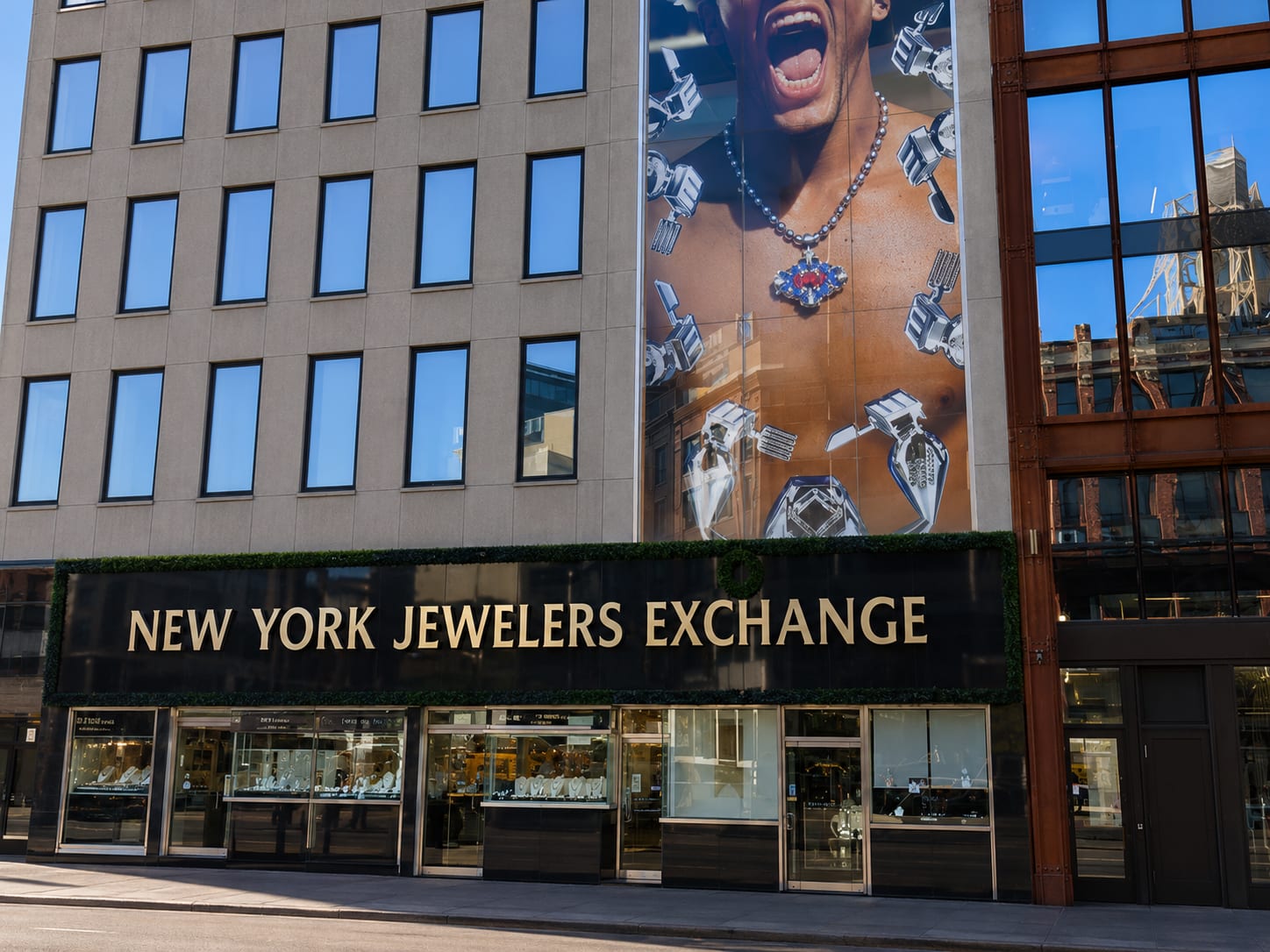
New York City has no shortage of places willing to buy your gold. There are storefronts in the Diamond District, shops along Canal Street and through Chinatown, pawn shops scattered across the boroughs, and a steady stream of mail-in companies advertising on your phone. The sheer number of options is what makes the decision harder than it looks. Two buyers can examine the same chain, the same scrap bracelet, or the same handful of broken earrings and quote numbers that are far apart. Knowing how the market works, and what separates one kind of buyer from another, is the best protection you have.
Why the Buyer Matters as Much as the Gold
Gold is one of the few things you can sell where the underlying value is public. The spot price moves throughout the trading day, and every legitimate buyer in Manhattan is watching the same number you can find online. What differs is the percentage of that value the buyer is willing to pay you, and that comes down to their costs and how they make money. A buyer who has to resell your gold to someone else, pay rent on a prime retail block, or cover the cost of advertising will build all of that into the offer.
That is why the question is not simply "who will buy my gold," but "who is buying it, and what happens to it afterward?" The answer shapes the offer more than almost anything else, including the day you choose to sell.
The Main Types of Gold Buyers in New York City
Retail jewelry stores
Many jewelers, including those along 47th Street in the Diamond District, will buy gold as a side business. It can be a perfectly reasonable option, especially if they specialize in the kind of piece you are selling. The catch is that most are retailers first. They may send scrap gold to a refinery or a larger dealer, which means there is a middleman taking a cut before the metal ever gets melted. If your piece has design value, a jeweler may also pay more attention to it than a pure scrap buyer would, but that depends entirely on the shop.
Pawn shops
Pawn shops earn most of their income from loans and from selling merchandise at retail. When they buy gold outright, they are pricing in the resale margin and their overhead. If you are curious how the two models compare in more detail, our guide on gold buyers versus pawn shops walks through it step by step. For a straightforward sale, a pawn shop is rarely built to give you the strongest number.
Mail-in gold companies
These companies send you a prepaid envelope or kit, and you ship your gold off without ever seeing it tested or weighed. The convenience is real, but so are the risks. You cannot watch the assessment, you cannot walk away if the offer seems low, and once the package leaves your hands you are relying entirely on their word. For anything of meaningful value, most people are more comfortable selling in person.
Direct buyers and in-house refiners
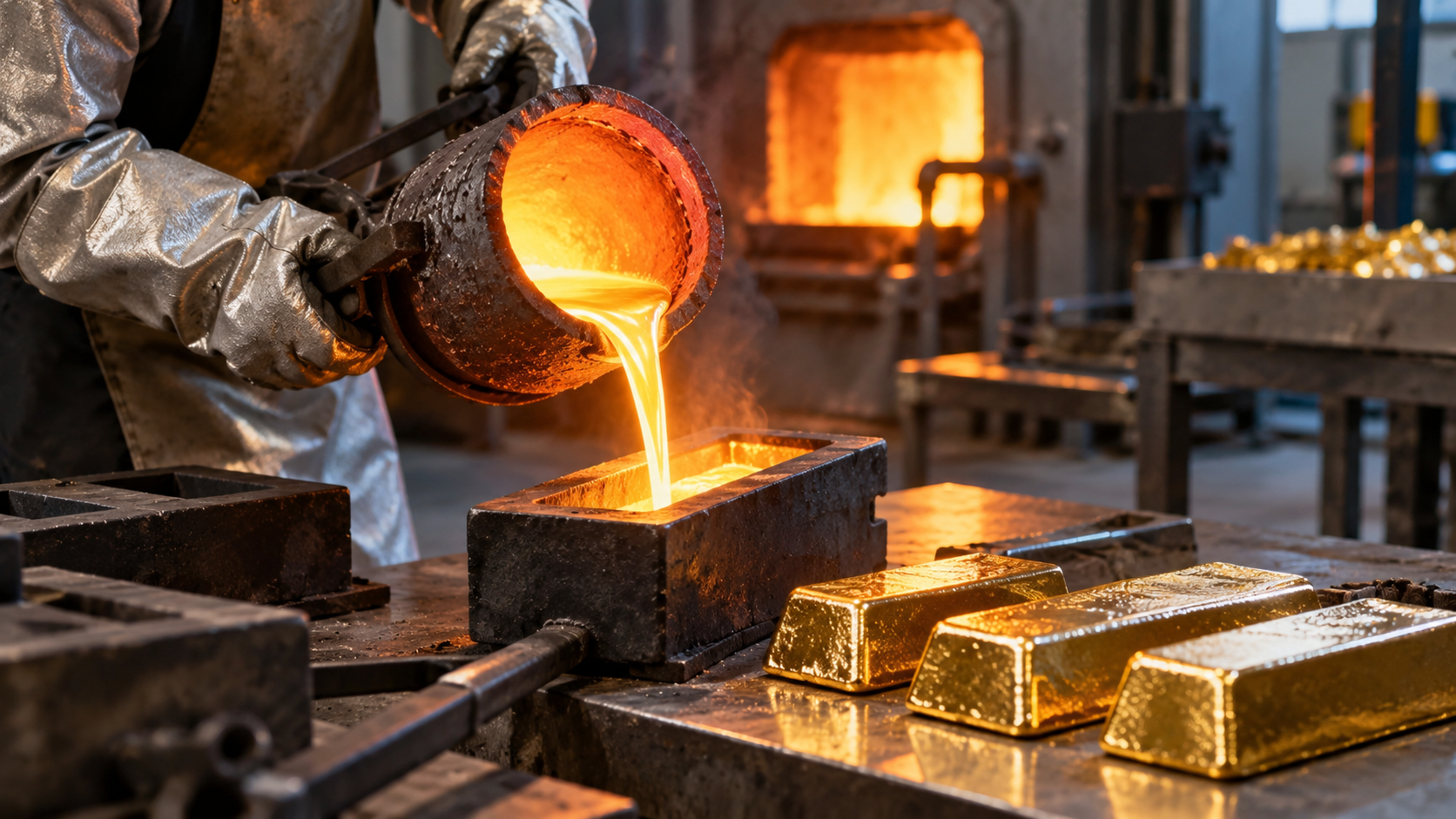
A direct buyer that refines its own gold sits at the end of the supply chain rather than the middle. Because the metal is melted and processed in-house, there is no third-party dealer taking a margin between your piece and the refinery. That structure is what allows a refiner to price offers closer to live market value. It is also why the appraisal can happen in front of you: there is nothing to hide and no secondary buyer to negotiate with behind the scenes.
How a Gold Payout Is Actually Calculated
Any honest gold offer comes down to three inputs: purity, weight, and the current market price. Once you understand these, you can do a rough version of the math yourself before you ever walk into a shop.
Purity (karat)
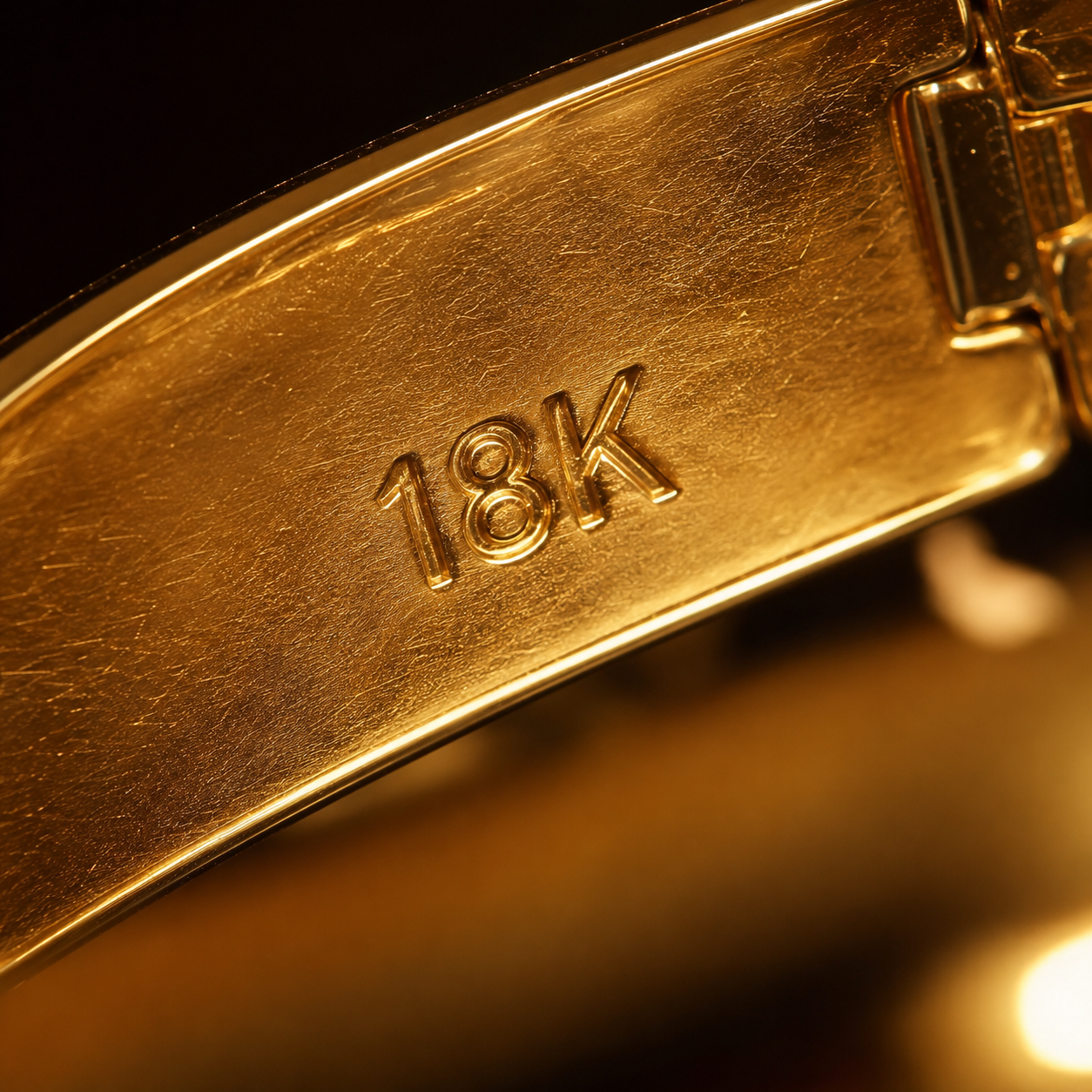
Karat measures how much of a piece is pure gold. 24k is essentially pure. 22k is about 91.7 percent gold, 18k is 75 percent, 14k is about 58.3 percent, and 10k is about 41.7 percent. Most jewelry in the United States is 14k or 18k, and the karat stamp is usually found on the clasp, the inside of a ring band, or a small tag on a chain. Some pieces carry no stamp at all, especially older or imported items, and a proper test will determine the real purity. Be cautious of marks like GF, GP, or HGE, which indicate gold-filled, gold-plated, or electroplated pieces with much less gold than solid jewelry.
Weight
Gold is priced by the troy ounce, which is about 31.1 grams, but buyers will typically weigh your piece in grams or pennyweights. The scale should be visible to you and should read clearly. Keep in mind that gemstones, enamel, and any non-gold components count toward the total weight on the scale but not toward the gold content, so a careful buyer will account for them. If a piece has a lot of stones, it is worth asking how they handled that in the calculation.
The spot price and the buyer's percentage
Once purity and weight are known, the buyer applies the live gold price and pays you a percentage of the pure gold value. That percentage is where buyers differ, and it is a fair thing to ask about. A buyer with lower costs and no middleman can generally afford a higher percentage than one who has to resell your gold to someone else.
Red Flags to Watch For
Most gold buyers in New York are legitimate, but a few habits are worth noticing. None of these prove bad intent on their own, but together they suggest you should take your gold elsewhere.
- Refusing to show the scale. Weighing should happen where you can see it, every time.
- Testing out of sight. Acid or electronic testing should be done in front of you, not in a back room.
- Vague or shifting numbers. A buyer should be able to explain the offer in terms of purity, weight, and the day's market price.
- Pressure to decide immediately. A fair offer will still be fair after you think it over or check another buyer.
- Gold parties and pop-up events. Hotel-room buying events and temporary setups give you little recourse if something goes wrong.
- No ID requirement. New York law requires a government-issued photo ID for this kind of sale. A buyer who skips it is cutting corners you should care about.
How to Prepare Before You Sell
A little preparation makes the process faster and gives you leverage. Start by gathering everything you might want to sell, including pieces you think are worthless, like a single earring, a snapped chain, or a bent ring. Broken gold is worth just as much as whole gold when it is sold as scrap. Do not polish or repair anything before you bring it in, since cleaning will not change the metal's value and repairs can cost more than they add.
Check the current gold price online so you have a general reference point, and look for karat stamps on each piece if you can. If you have any paperwork for higher-end items, such as receipts or certificates, bring it along. Finally, bring a valid government photo ID, which is required before any buyer can legally complete the transaction.
Why Location Helps, but Isn't Everything
Shopping around in New York is easy because so many buyers are packed into the same neighborhoods. Downtown, the Financial District, Chinatown, and the Bowery are all a short walk or subway ride from one another, so getting two or three opinions in a single afternoon is realistic. That convenience works in your favor. Comparing a few in-person offers is one of the simplest ways to confirm you are being treated fairly, and any buyer confident in their pricing should be comfortable with you doing it.
What to Expect at Ideal Refiners
At Ideal Refiners, we are a direct buyer and in-house refiner, not a pawn shop, a consignment house, or a retailer. Every appraisal is free and carries no obligation. We test and weigh your gold in front of you, explain how we arrived at the number based on live market rates, and leave the decision to you. Most items take roughly 20 minutes, and if you accept, we pay the same day in cash or by bank transfer.
If you have gold sitting in a drawer and want to know what it is worth, you are welcome to stop by our office at 70 Bowery #1.1, New York, NY 10013. We are open Monday through Thursday from 10am to 5pm and Friday from 10am to 3pm. Bring a government photo ID, and feel free to call us at (347) 970-1562 with any questions first. There is no pressure, and you are free to compare our offer with others.