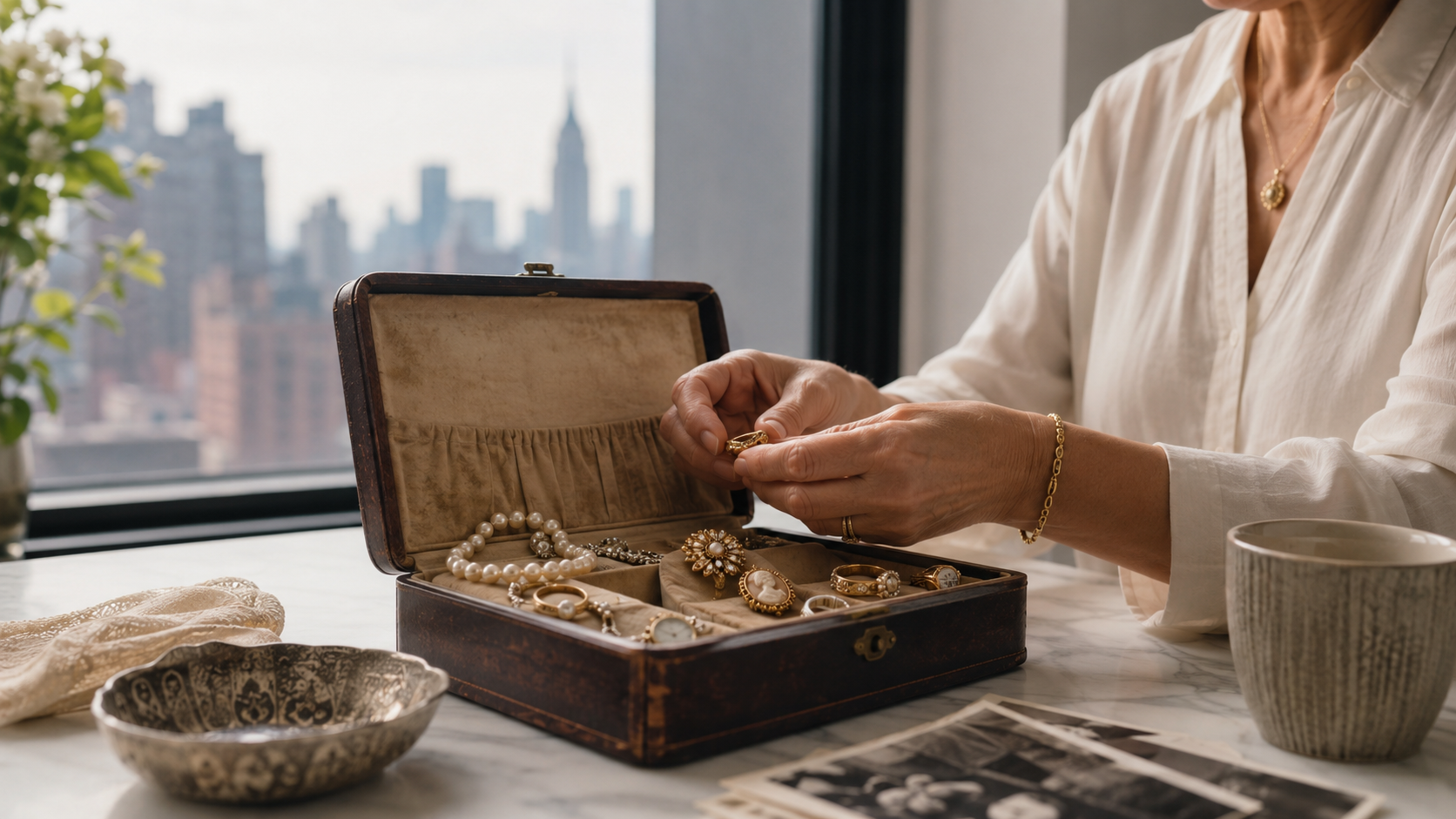
Almost everyone who walks into a gold buyer's office with a ring, chain, or old bracelet asks some version of the same question: what is this actually worth? It is a fair question, and it deserves a real answer rather than a vague number pulled out of thin air. Gold pricing is not mysterious once you understand the handful of variables that drive it, and once you know them, you can walk into any appraisal in New York City, whether it is on the Bowery, in the Diamond District, or along a stretch of Chinatown, and know roughly what to expect before an offer is even written down.
The short version is that a gold payout comes down to three things: the purity of the metal, the weight of the piece, and the live market price of gold on the day you sell. Everything else, the brand stamped on the clasp, how old the piece is, whether it came from a department store or a flea market, has almost no bearing on the melt value. That surprises a lot of people, and it is worth slowing down to explain why.
Purity Is the First Number That Matters
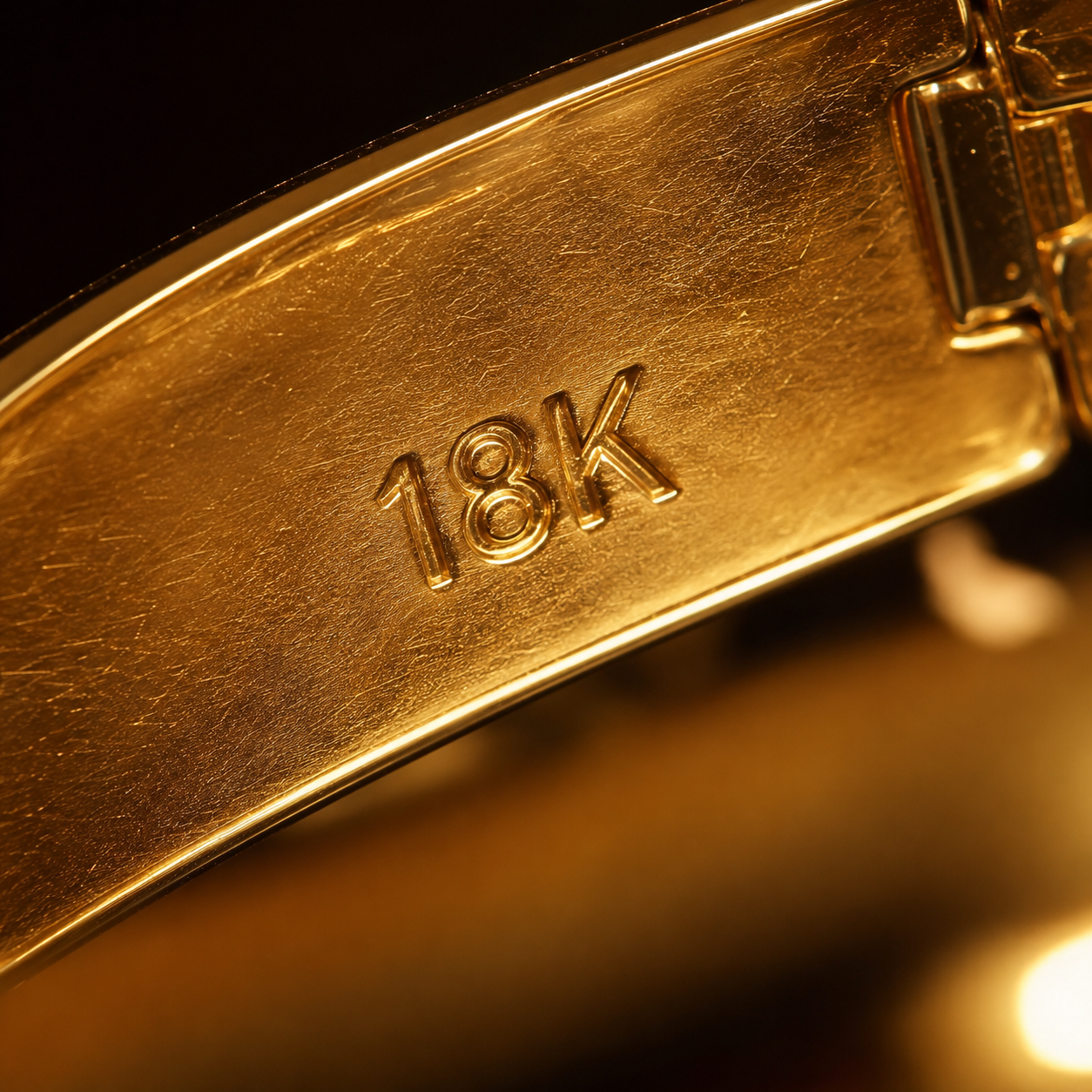
Pure gold is 24 karat, but almost nobody wears 24k jewelry because it is too soft for daily use. Jewelers alloy it with metals like copper, silver, or zinc to make it durable, and the karat stamp tells you what percentage of the piece is actual gold. 14 karat gold is 58.3 percent pure. 18 karat is 75 percent pure. 10 karat, common in older American jewelry, is 41.7 percent pure. 22 karat and 24 karat pieces, which show up frequently in South Asian and Middle Eastern jewelry sold around Manhattan, run much higher in purity and therefore much higher in payout per gram.
Look for a stamp somewhere on the piece, usually on the inside of a ring band or near the clasp of a bracelet or chain. You might see "14K," "585," "18K," "750," or similar markings. These numbers are industry standard and they are the starting point for any honest appraisal. If a piece has no stamp at all, a reputable buyer will test it using acid testing or an electronic gold tester rather than guessing, and that test result becomes the basis for the offer.
Why Karat Confusion Costs Sellers Money
A surprising number of people assume that anything gold colored and heavy must be solid gold, or that a piece stamped 10K is somehow "less real" than one stamped 18K. Neither assumption helps you. Gold filled and gold plated items look similar to solid gold but contain only a thin layer of gold over a base metal, and they are worth a small fraction of what solid gold brings, if anything at all in melt value. Knowing the difference between solid, filled, and plated before you sell keeps you from either overestimating what you own or, worse, undervaluing a genuinely solid piece because you assumed it was cheap costume jewelry.
Weight Is the Second Number
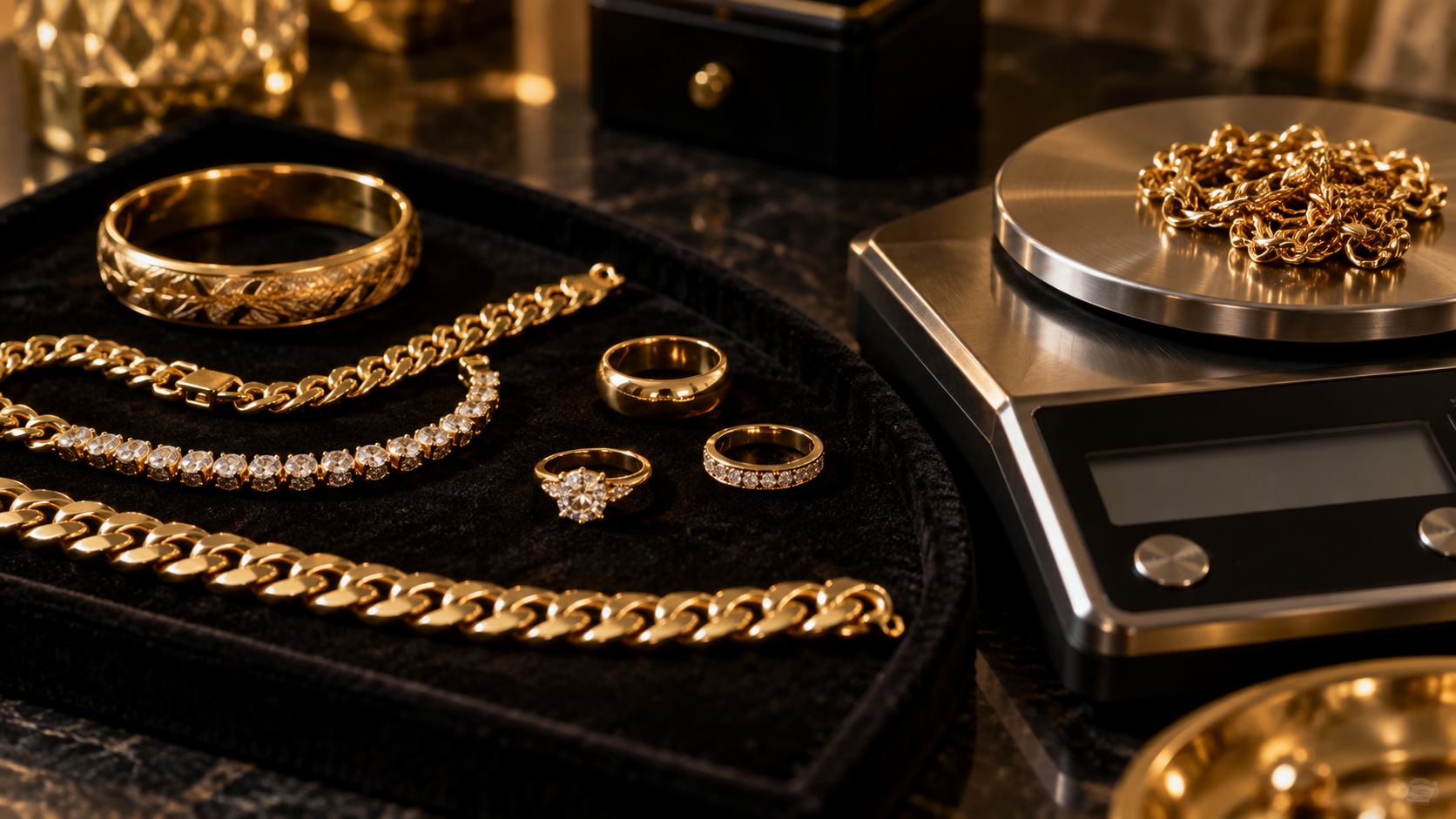
Once purity is established, weight determines how much actual gold you are holding. Buyers weigh jewelry in grams on a calibrated scale, and that gram weight, multiplied by the karat purity, gives the amount of pure gold content in the piece. A heavy 14k chain and a delicate 18k bracelet can end up worth similar amounts even though one looks far more substantial, because the math balances weight against purity rather than treating either one alone as the deciding factor.
Stones, clasps, and non-gold components are typically deducted from the weight before calculating the gold value, since they do not melt down as gold. A ring with a large center stone will be weighed with an estimate for stone deduction, or in some cases the stone is removed and assessed separately if it has its own resale value. This is one of the reasons two rings that look similar in size can have very different payouts once you account for what is actually gold versus what is decoration.
The Spot Price Sets the Ceiling
Gold trades on a global market and the spot price moves throughout the trading day based on currency strength, interest rates, and broader economic conditions. Every legitimate gold buyer bases their offer on that day's spot price, not on a number they made up last week. This is why the same necklace might fetch a slightly different offer on a Tuesday than it would on a Friday, and it is also why asking "what would this be worth" without reference to a specific day rarely gets a precise answer.
A fair buyer will calculate a percentage of the spot price based on the pure gold content of your item and pay you accordingly. Nobody pays 100 percent of spot on retail purchases of scrap or estate jewelry, because refining, testing, and market risk all cost something, but there should be a transparent, explainable percentage behind every offer. If a buyer cannot or will not explain how they arrived at a number, that is a signal to get a second opinion before agreeing to anything.
What Does Not Affect Melt Value (and What Might)
Brand names, retail packaging, and how much you originally paid have no bearing on melt value. A gold chain from a well known jeweler and one from a small shop in Chinatown are worth the same if they share the same karat and weight. Sentimental history matters to you, understandably, but it does not change what a refiner can extract from the metal.
That said, a few things can shift a piece into a different, higher category entirely. Designer jewelry from houses like Cartier, Van Cleef & Arpels, or Tiffany can sometimes be worth more as a resale item than as scrap, particularly if it is in excellent condition and still has recognizable design elements. Estate pieces with unusual craftsmanship or antique settings occasionally fall into this category too. A knowledgeable buyer will flag this during the appraisal rather than melting something that is worth more intact, and it is one advantage of working with a buyer who understands both refining and resale rather than one who only knows scrap weight.
Why Selling Direct to a Refiner Changes the Math
Many "cash for gold" storefronts and pawn shops are not refiners themselves. They buy from the public, then resell to a middleman or a refinery, and that middleman takes a cut before the gold is ever melted down. Every link in that chain needs to make a margin, and those margins come directly out of what you are offered at the counter. A pawn shop also has to account for the risk of unredeemed loans, which pushes their gold buying offers even lower since gold purchases often subsidize a business built around lending.
Ideal Refiners is different because we are the refiner. There is no middleman between your appraisal and the melt, which means there is no extra margin buried in the offer. We appraise gold, watches, diamonds, and fine jewelry in person, calculate a price based on the live market, and pay you directly the same day. Cutting out that extra step is one of the most consistent ways to walk away with more money for the same piece of jewelry.
How to Get a Fair Offer
Bring everything you are considering selling to one appraisal rather than piecing it out across multiple visits. Buyers can often give you a slightly better rate on volume, and it saves you the hassle of repeating the process. Clean, loose stones separately if you know a piece has a stone worth more on its own, and mention any brand history you know, since it can occasionally change how a piece is evaluated.
Get a second opinion if a number feels low, and do not be afraid to walk. A reputable buyer will not pressure you, and the appraisal itself should be free with no obligation to accept. New York State also requires a valid government issued photo ID for any of these transactions, so bring your driver's license or passport along with the jewelry itself.
Visit Ideal Refiners in Downtown Manhattan
If you want to know exactly what your gold jewelry is worth today, bring it by our office at 70 Bowery #1.1 in Downtown Manhattan, an easy stop whether you are coming from the Financial District, Chinatown, or the Diamond District further uptown. Most appraisals take about 20 minutes, there is no obligation to sell, and if you accept our offer we pay the same day in cash or by bank transfer. We are open Monday through Thursday from 10am to 5pm and Friday from 10am to 3pm, and you can reach us at (347) 970-1562 with any questions before you come in.